
Key takeaways
KPIs and OKRs (and how to set them up for your team) are part of the Monday SimonManager Development Program:
👉 Module 2:Goal setting for managers👉 Module 5:Performance management for managers
So, KPIs and OKRs… What is it, and when do you use both? This debate usually belongs to HR, but as a manager, you should still care. If you don’t understand the difference, your team might end up chasing the wrong things, i.e., maintaining stability when they should be driving growth, or pushing for big goals when the focus should be steady performance.
What are KPIs and OKRs?
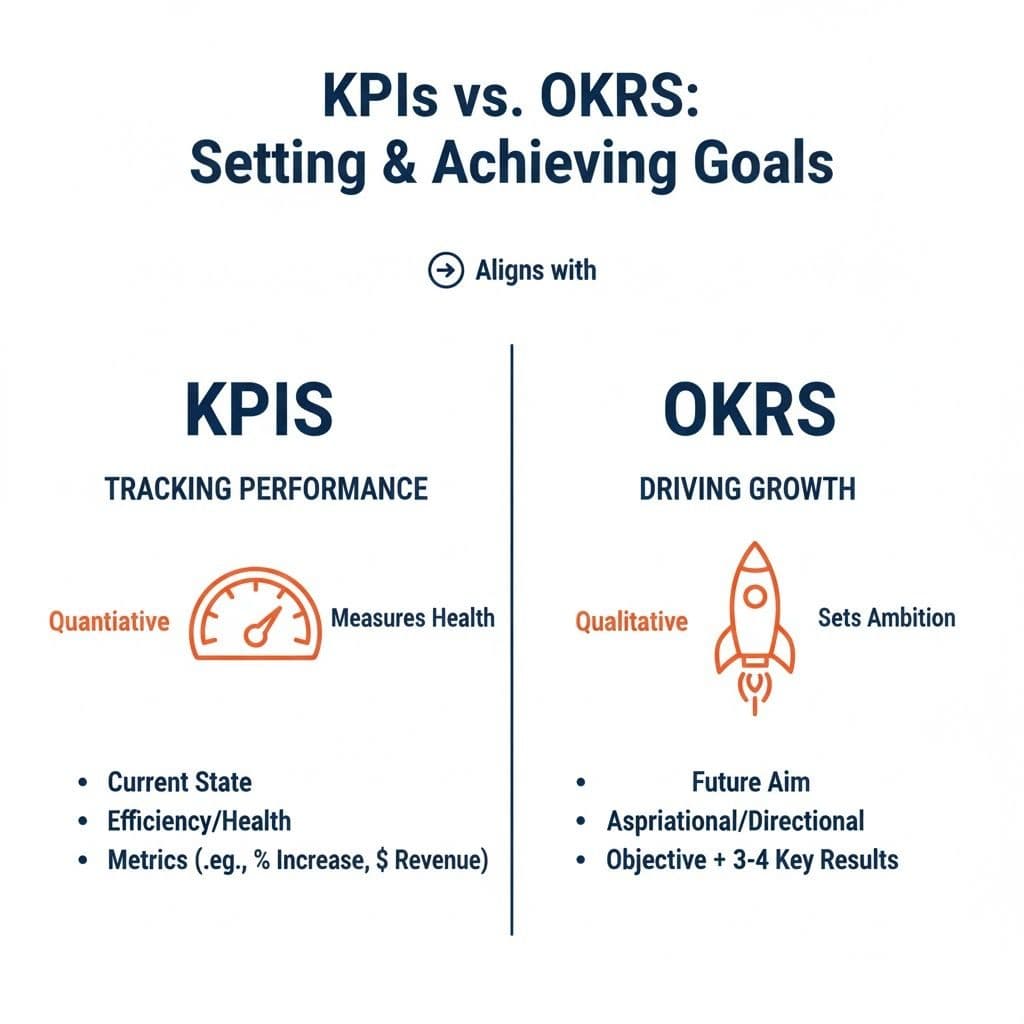
Think of it this way: KPIs (Key Performance Indicators) are your vital signs. They tell you if you are healthy, sick, or dead. They are measures: revenue, retention rate, and average resolution time.
OKR (Objectives and Key Results) is thechangeyou want to make. It's the goal-setting system you use to drive improvement. OKRs are ambitious, time-bound targets that say, "We want to move the needle from X to Y in the next 90 days."
To make it simple :
KPIs and OKRs are not interchangeable, but they are complementary.
When to Use KPIs and OKR
These are the distinctions between KPIs and OKR :
Do you see the difference?
Suppose your goal is to enhance customer satisfaction. A KPI might be "Maintain a customer satisfaction score of 90%." An OKR could be "Objective: Lead the market in customer satisfaction in Southeast Asia within 12 months. Key Results: 1) Implement a new customer feedback system by Q2, 2) Train all customer service staff in advanced service techniques by Q3, 3) Achieve a 15% increase in customer satisfaction scores in key markets."
⚠️ If your organization does not communicate clear company objectives, don’t use OKRs. You will fail to create alignment. OKRs only work when they’re tied to strategic outcomes, where each action directly supports a higher goal. Once you have set the objectives, the critical aspect that is too often overlooked is the monitoring. To do so, strictly implementone on one meetingswith your staff to review the performance.
Use KPIs instead when you have the freedom to define your own tactics and performance standards as a manager. In my view, KPIs are simpler and more practical to implement.
How to Use OKRs and KPIs Together
While OKRs and KPIs serve different purposes, they can be used together to create a comprehensiveperformance managementsystem.
1. KPIs are Lagging Indicators (What Happened): A good KPI is an output that reflects the health of a critical business process. This tells you if you met the company standard. It needs to be closely monitored, but it doesn't tell youhowto fix a low score.
2. OKR is the Engine for Change (What We Will Do): If your CSAT KPI is low, you need to drive movement. That's where you create an OKR. The Objective is qualitative and inspiring:“Objective: Dramatically improve the quality of our Tier 1 customer support experience.”
The Key Results (KRs) are the measurable targets that prove you hit the objective:
Notice that the Key Results here are often leading indicators; they measure theactivitythat causes the KPI (CSAT) to improve later. This combination of KPIs and OKR turns simple measurement into strategic action. You monitor the KPI, but you manage the OKRs.
Note: If you have just hired your team member, DO NOT go "full" KPIs during the probation period. Adjust the targets with clearprobation objectivesbefore setting the full targets after a successful probation period.
KPIs and OKRs in the end, it doesn’t really matter.
While it’s important to understand what each is and when to use them (since your organization will likely adopt one or the other), the terminology isn’t what drives performance. What truly matters is that your objectives are clear to your team.
Clear objectives are calledSMART goals. For example:“Increase team productivity by 20% through weekly training sessions by the end of Q3.”This goal works perfectly within both OKR and KPI frameworks.
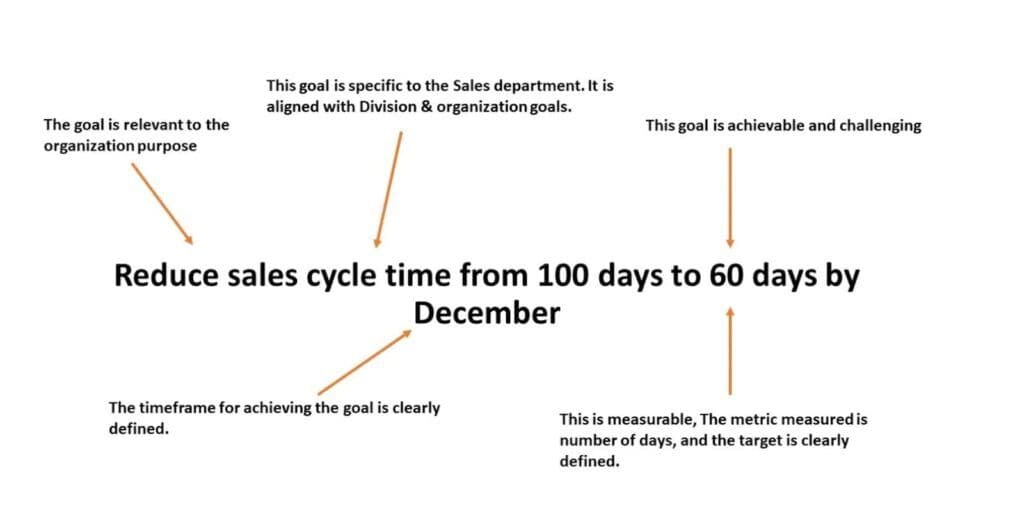
Your real job as a manager is to clarify the goal and define the steps. Use KPIs or OKRs as tools to bring that clarity, not as labels that complicate it. You can use mycustomChatGPT toolto generate OKRs and KPIs that suit your department's objectives. The performance outputs achieved by your team will help you definehigh performers,Poor performers, andhigh potential employees.
If you need more Manager resources, click on this link to check out myManager toolspage. I regularly publish actionable resources for managers.
MORE MANAGER DEVELOPMENT RESOURCES
This article is part of our performance management resources.
Stay sharp for Monday
Practical resources to help managers lead smarter, faster, and with confidence.


