
Key takeaways
If you’re a line manager, your biggest time drain is putting out fires you never saw coming. And to my view the single most powerful tool you have for preventative management is the one on one meeting. The one-on-one is part of the Monday SimonManager Development Program: 👉 Module 3:Team development training👉 Module 4:Coaching for managers
What is a one on one ?
A one on one is a regularly scheduled, dedicated, and protected time slot between a manager and their direct report. It is not a status report, not a random chat, and not a chance to dump new tasks. It's the only formal forum for discussing the employee's career, their frustrations, and the systemic organizational garbage that is slowing them down.
The one on one is also the space for you to give and receive feedback, whether it is about the employee development or his/her performance. Once you have set clear goals for your team, the one on one becomes one of your top management tools forperformance management.

To support your preparation to one on one, you can use my customChatGPT for one on ones.
When to Use the One on One?
The true value of theone on one comes into sharp focus during specific, common scenarios:
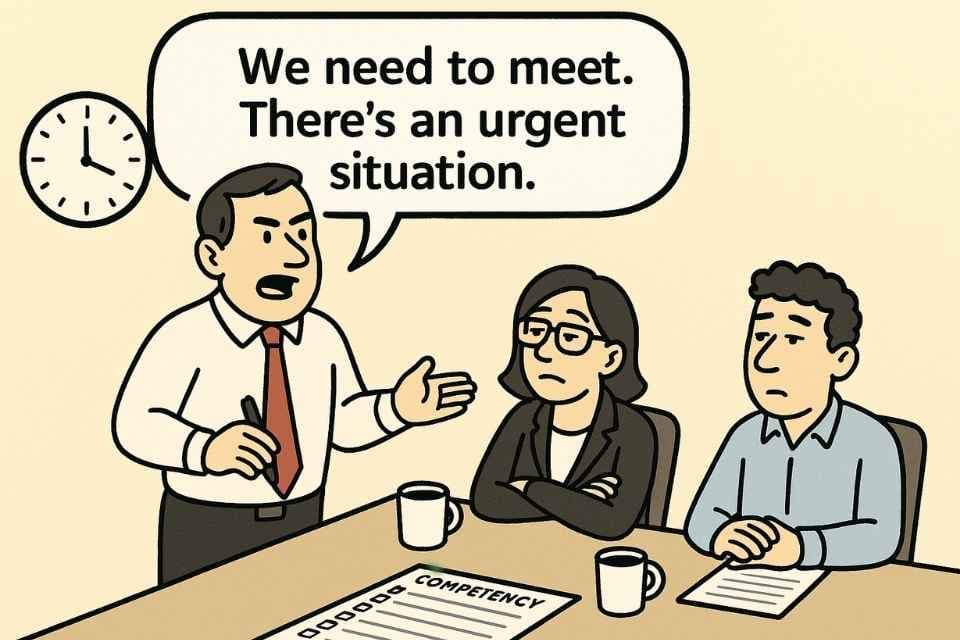
Overall, the one on one is the most recommended tool in your management toolbox to engage and proactively detect signals that work and development is on track.
RELATED RESOURCES
You may also find our team development resources useful.
Stop Wasting Time on Status Updates
The common management mistake is using the one on one slot to ask, "So, what are you working on?" Stop doing that. That information belongs in a daily standup, a project tracker, or an email update.
Here’s what actually works in a high-impact one on one:
1. Structure the meeting, and structure it rigidly. This is my personal recommended structure for the one on one: a. Introduction - Start with a brief check-in to set a positive tone.
b. Performance Review
c. Development Discussion
d. Feedback Exchange
e. Summarize key points discussed.
f. Open Discussion
2. Listen for the System, Not the Symptom: When an employee complains about "too much work," the symptom is stress. The system problem might be poor delegation from a peer, a lack of clear priorities from leadership, or a broken approval process. Your job in the session is to diagnose the underlying system failure.
Some of these conversations are genuinely hard to run alone. When one is coming up, you can work it through with a coach first and walk in with the words already chosen.
3. No Rescheduling/Cancelling: If you must move it, move it immediately to the same week. Consistency builds psychological safety, and safety leads to honesty, which is the only thing that saves you time long-term.The effective one on one isn't about micromanagement; it's about macro-management, using targeted conversations to fix systemic problems before they impact the business.
DownloadFeedback Operating Systemtemplate
This feedback operating system is a written commitment I expect managers to use to manage their teams effectively. Download this template to document the expectations for your management style and feedback habits.
Why the One on One Pays for Itself
This meeting is the only guaranteed ROI you have on your management calendar. The content of your one on one may differ whether you are dealing withHigh performers,Poor performers, orHigh potential employees.
Stop viewing the one on one as a luxury or a time sink. It’s your maintenance schedule for the most expensive assets in your business: your people.
For templates on how to structure your agenda and tools for capturing notes without sounding like a robot, download the resources on theManager toolspage.
MORE MANAGER DEVELOPMENT RESOURCES
This article is part of our feedback and coaching resources.
Stay sharp for Monday
Practical resources to help managers lead smarter, faster, and with confidence.


