Manager basics for busy managers
I have listed the core concepts every manager needs to master to lead people with confidence.
Manager Basics brings together the essential concepts every manager must know, from goal setting, feedback, coaching, performance, and development. These are the non-negotiable basics that shape your role and responsibilities as a manager.
Whether you are a first-time manager or simply want to strengthen your foundation, this guide helps you understand the jargon companies use when it comes to your end to end management duties.
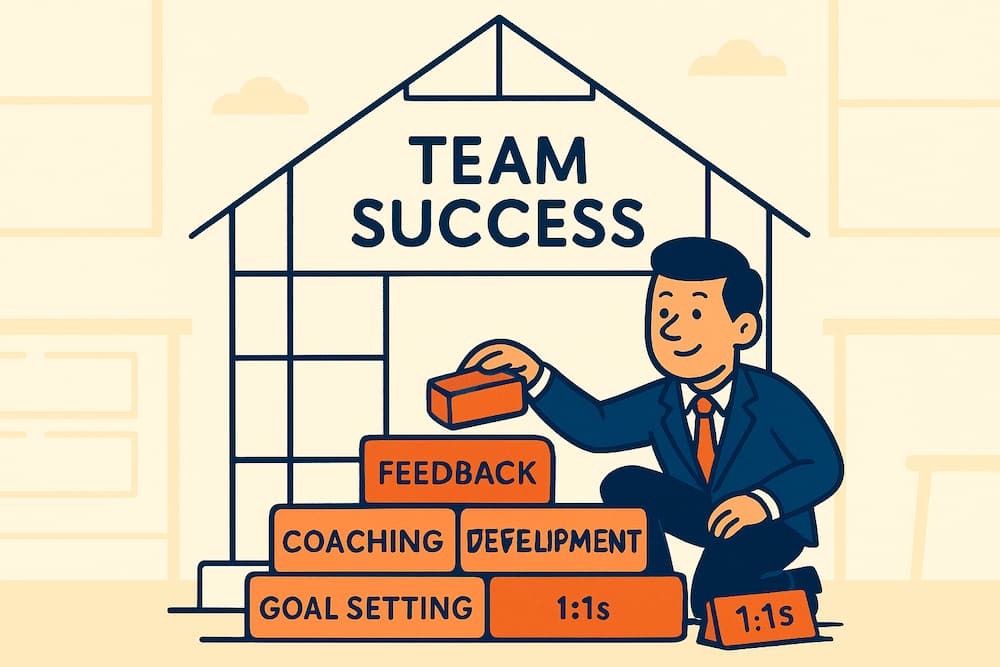
Manager basics summary
People management fundamentals
Manager Basics: Fundamentals
Managers can’t escape these fundamentals. They’re the core concepts every HR team expects leaders to understand. These essentials are introduced in Module 1 of the Manager Development Program: People Management Training.
Competencies
Competencies are the behaviours, skills, and attitudes that define how work gets done. They help managers set clear expectations, guide development conversations, and ensure everyone understands what good performance looks like in daily work.
Performance Management
Performance Management is the continuous, day-to-day conversation that clarifies expectations, tracks progress, and immediately course-corrects. It is not “just” about accountability; it is about making the Manager’s job easier.
KPIs and OKRs
KPIs (Key Performance Indicators) are all about measuring vital signs, such as revenue, retention rate, and average resolution time. OKR (Objectives and Key Results) is the change we want to make. It’s the system used to drive improvement.
One on one meetings
A one-on-one is a regularly scheduled, dedicated, and protected time slot between a manager and their direct report. They help to prevent a crisis, detecting employee career and skill development, and provide a safe space of discussion.
SETTING GOALS AND DRIVING RESULTS
Manager Basics: Goal setting
Managers succeed when expectations are clear. Goal setting is the foundation: defining priorities, aligning KPIs and OKRs, and giving teams a concrete direction. These principles are covered in Module 2 of the Manager Development Program : Goal setting for managers training.
KPIs and OKRs
While KPIs measure performance by number and percentage, OKRs help identify actions needed to achieve the goals. KPIs and OKRs are not interchangeable, but they are complementary.
SMART goals
SMART Goals is the system that defines accountability upfront. They help to ensure that every set target is clear, measurable, and achievable. It also needs to be Time-Bound to start tracking results.
DEVELOPING TEAM MEMBERS
Manager Basics: Team Development
Managers need a strong Team development foundation. Without the right tools, it is impossible to develop effective strategies. These principles are covered in Module 3 of the Manager Development Program : Team Development Training.
Individual Development Plan (IDP)
An Individual Development Plan (IDP) is a personalized action plan designed to help employees develop their skills and competencies for career growth and performance goals.
High performers
A high performer is an individual who consistently delivers higher business impact relative to their role and seniority. Managers often fail to give them sufficient attention when they should retain the top talent.
Competencies
Competencies capture the skills, behaviours, and attitudes that influence how work is delivered. Instead of tracking many, managers should emphasise the three core competencies that best support development.
70-20-10 learning model
The 70-20-10 learning model is a simple yet powerful ratio. It states that approximately 70% from direct job assignments, 20% from feedback such as coaching and training, and only 10% from formal learning.
COACHING & FEEDBACK CONVERSATIONS
Manager Basics: Feedback and Coaching Conversations
Managers have to master giving feedback and supporting the team to reach their goals. They are the ones holding the team together and determining employee growth. These essentials are introduced in Module 4 of the Manager Development Program : Coaching for Managers Training.
GROW Coaching Model
The GROW coaching model is a four-step conversational framework designed to guide an employee from a problem they own to a solution they create. It helps Managers to build a strong team capabilities.
FIAC feedback
Use FIAC Feedback to address specific, repeatable behaviors that are actively helping or hurting your team’s results. The best way to use FIAC is during a one-on-one meeting to provide direct and tough feedback.
One on one meetings
A one-on-one is a consistent, dedicated space for a manager and their direct report to talk without interruptions. These meetings prevent small issues from escalating and give employees a safe moment to surface concerns.
PERFORMANCE MANAGEMENT IN PRACTICE
Manager Basics: Performance Management
Performance management has a direct impact on the business results. There is no way Managers do not use them daily. These essentials are introduced in Module 5 of the Manager Development Program : Performance Management for Managers Training.
Performance management
Performance management is an ongoing, everyday dialogue that sets expectations, monitors progress, and enables quick adjustment. It strengthens results by addressing performance issues early and ensuring everyone stays aligned on priorities.
Performance Improvement Plan (PIP)
A Performance Improvement Plan (PIP) is a formal written document between the manager and the employee that outlines specific, non-negotiable standards. Managers also have to ensure that actions are achieved within a short timeframe.
High potential employees
High-potential employees are individuals who consistently show strong performance and clear capacity for bigger roles. They learn quickly, take initiative, and adapt well to new challenges. Identifying them early allows to prepare for future leadership roles.
Poor performers
A poor performer is the person whose output, attitude, or consistency creates drag on the team’s overall results. Don’t let this fester for months. Stop giving them excuses and start the process when they underperform three times in a quarter.
Bell curve
The bell curve is a distribution model often used in performance reviews to compare results across a team. It helps managers spot outliers, understand overall performance patterns, and make more objective talent decisions.
9 box grid
The 9 box grid is a simple talent mapping tool that compares an employee’s performance with their potential. It helps managers identify future leaders, spot development needs, and make clearer succession and growth decisions across the team.
High performers
High performers consistently deliver strong results and maintain high standards in their work. They take ownership, solve problems independently, and often set the pace for the rest of the team. Recognizing them helps managers support continued growth.
HIRING IN PRACTICE
Manager Basics: Recruitment
Managers must be able to hire the right talent. This starts with clearly defining the competencies and expected outcomes required for success in the role. These essentials are introduced in Module 6 of the Manager Development Program.
Recruitment scorecard
A recruitment scorecard is a standardized document that defines the specific, measurable outcomes, competencies, and cultural fits required for a role before the first interview happens. The recruitment scorecard helps as an accountability tool.
STAR interview method
The STAR interview method keeps everyone grounded in what really happened. It helps to turn subjective stories into clear, factual examples, whether you’re interviewing, providing feedback, or documenting performance.
Probation objectives
Probation objectives give new hires clear expectations for their first months on the job. They outline the essential tasks, behaviours, and results required to confirm employment, helping managers track progress and address issues early.
Behavioral interview
A behavioral interview explores how a candidate has handled real situations in past roles. By focusing on actions and outcomes, managers can predict future performance and assess whether the candidate fits the role’s requirements.
Structured Interview
A recruitment scorecard is a standardized document that defines the specific, measurable outcomes, competencies, and cultural fits required for a role before the first interview happens.
STAR interview method
The STAR interview method keeps everyone grounded in with facts. It helps to turn messy, subjective stories into clear, factual examples, whether you’re interviewing, providing feedback, or documenting performance.
Recruitment process
The recruitment process provides a clear roadmap for hiring the right candidate, from defining the role to making the final offer. It helps managers follow a structured flow and avoid common mistakes.
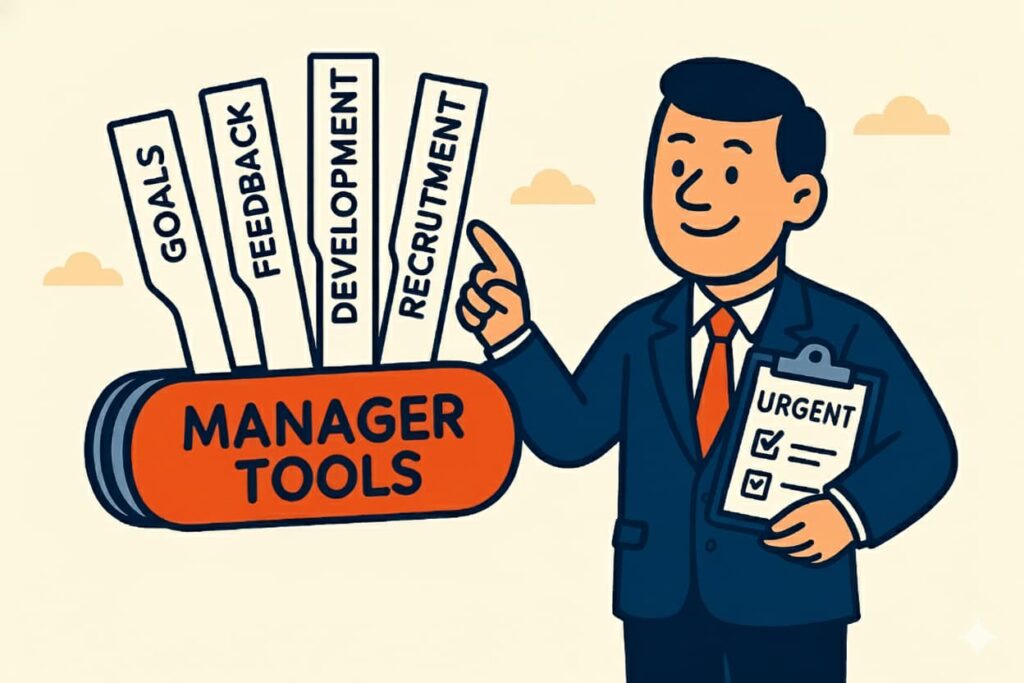
Discover My Manager tools
Essential manager tools I created essentially to make shortcuts on tedious management work and get to know your management style faster.
Manager tools >Manager development program
Turn Manager Basics into Real Results
You’ve learned the basics, now master how to apply them. The Manager Development Program shows you how to turn everyday management skills into real performance results.