Real management mistakes on an anonymous wall of shame
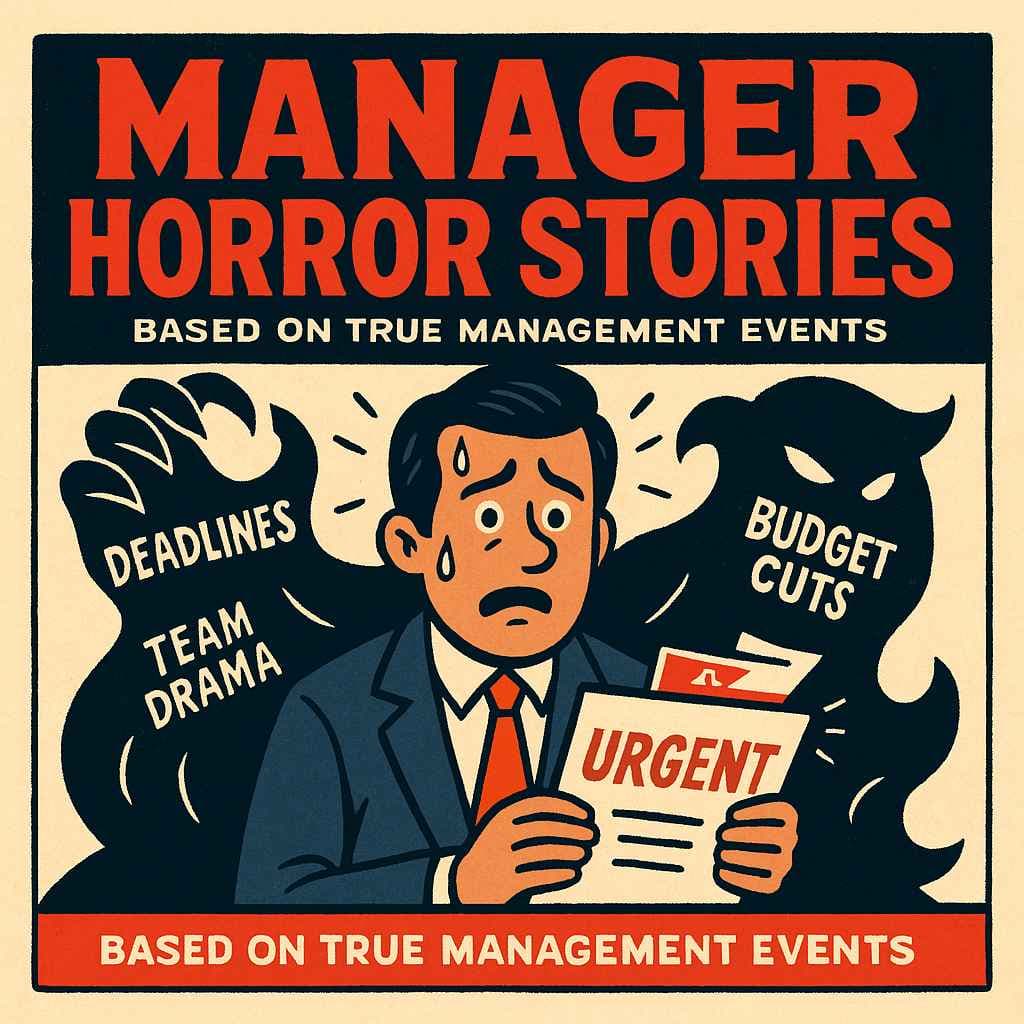
This is not about shaming managers. But let’s be honest, we all hear about poor management mistakes. These stories deserve to be known. So on this wall, I am listing real management mistakes from our readers and displaying them as FAQs. If you are wondering, yes, we can make fun of it while learning at the same time. If you have stories, feel free to share. I will keep them confidential and pin them on the wall with a dedicated category.
Submit your bad manager story
Submit your bad manager story. I will review each one to moderate. No names to maintain confidentiality. The objective is to present real stories to share with the world that yes, you are not alone. This gives me daily inspiration to design content for manager development programs.
MICROMANAGEMENT NIGHTMARES
Micromanagers think they are ensuring quality. What they are actually doing is killing initiative and trust. Here is a sample:
My manager put me on Time doctor to monitor my “screen”productivity”. Is this okay?
No. Screen monitoring software like Time Doctor is not about productivity. It is about control disguised as accountability. If your manager needs software to track whether you are working, they have already failed at the basics: setting clear goals and building trust.
What to do:
– Document your results. Keep a log of what you deliver, when you deliver it, and the impact it has. Make your productivity undeniable.
– Have the conversation. Ask your manager: “What outcome are you trying to achieve with this monitoring? How can I demonstrate my productivity in a way that works for both of us?”
– Set boundaries. If the monitoring continues despite strong results, this is a trust issue that will not get better..
What to do:
– Document your results. Keep a log of what you deliver, when you deliver it, and the impact it has. Make your productivity undeniable.
– Have the conversation. Ask your manager: “What outcome are you trying to achieve with this monitoring? How can I demonstrate my productivity in a way that works for both of us?”
– Set boundaries. If the monitoring continues despite strong results, this is a trust issue that will not get better..
Is it normal for my manager to track my bathroom breaks?
Absolutely not. If your manager is timing your restroom visits, you are not working for a manager. You are working for a warden.
– Address it directly. Yes, it is uncomfortable. Do it anyway.
– Escalate if necessary. If your manager doubles down, this is an HR issue. Bathroom monitoring creates a hostile work environment. Document it and escalate.
– Know when to leave. If HR does nothing and this behavior continues, you are working in a toxic environment. Protect yourself and start your exit plan.
– Address it directly. Yes, it is uncomfortable. Do it anyway.
– Escalate if necessary. If your manager doubles down, this is an HR issue. Bathroom monitoring creates a hostile work environment. Document it and escalate.
– Know when to leave. If HR does nothing and this behavior continues, you are working in a toxic environment. Protect yourself and start your exit plan.
CREDIT THIEVES
Whether it is on purpose or not, some managers climb the ladder by stepping on your back. They take credit when things go right and point fingers when things go wrong. Whether it is on purpose or not, this has happened:
How do I deal with a manager who keeps taking credit for my work?
Document everything. Send recap emails. CC stakeholders when appropriate. Make your contributions visible before they get stolen. Managers who steal credit rarely change because the behavior works for them… until it doesn’t anymore. Also:
Speak up in meetings. When your manager presents your work, add context: “I am glad this approach worked. When I was building the model, I found that [detail].” Own your contributions publicly but professionally.
Have the direct conversation. If it continues, address it privately: “I have noticed that when we present to leadership, my contributions are not always attributed. I would appreciate visibility for my work. How can we make sure that happens?”
Speak up in meetings. When your manager presents your work, add context: “I am glad this approach worked. When I was building the model, I found that [detail].” Own your contributions publicly but professionally.
Have the direct conversation. If it continues, address it privately: “I have noticed that when we present to leadership, my contributions are not always attributed. I would appreciate visibility for my work. How can we make sure that happens?”
Why does my manager throw me under the bus when executives ask questions?
Because they value their own reputation over your career. Great managers protect their team and own the failures. When your manager throws you under the bus, they are telling you exactly who they are. And to my view you should believe them.
– Document the facts. Keep records of what you were asked to do, what resources you had, and what you delivered. When blame gets thrown your way, you need receipts.
– Respond with facts, not emotion. If you are blamed in a meeting, stay calm and factual: “Let me clarify the timeline. I was asked to deliver X by [date] with [resources]. Here is what I delivered and when.” Do not get defensive. Just present the data.
– Address it privately. After the meeting, talk to your manager: “When executives asked about the project, I felt like the context was missing. Can we align on how we communicate project challenges to leadership?”
– Protect yourself going forward. Send status updates. Document decisions. CC appropriately. If your manager continues this pattern, escalate to HR or start planning your exit. You cannot fix a coward.
– Document the facts. Keep records of what you were asked to do, what resources you had, and what you delivered. When blame gets thrown your way, you need receipts.
– Respond with facts, not emotion. If you are blamed in a meeting, stay calm and factual: “Let me clarify the timeline. I was asked to deliver X by [date] with [resources]. Here is what I delivered and when.” Do not get defensive. Just present the data.
– Address it privately. After the meeting, talk to your manager: “When executives asked about the project, I felt like the context was missing. Can we align on how we communicate project challenges to leadership?”
– Protect yourself going forward. Send status updates. Document decisions. CC appropriately. If your manager continues this pattern, escalate to HR or start planning your exit. You cannot fix a coward.
My manager blames the team for his own missed deadlines. What now?
If he is blaming you for his failures, document everything and evaluate improvement. Or… Life is too short to work with for a coward?
– Document decision points. Every time your manager makes a decision that impacts timelines, confirm it in writing: “Per our discussion, we are moving forward with approach X, which will require [timeline/resources].” Create an audit trail.
– Clarify accountability in real-time. When your manager assigns work, confirm expectations: “Just to be clear, you need [deliverable] by [date]. I will need [resources/support] to make that happen. Can you confirm?” Get written confirmation.
– Respond factually when blamed. When he blames the team, calmly present the facts: “Here is the timeline we were given and the resources we had. Here is what we delivered within those constraints.” Let the data speak.
– Escalate or leave. If this is a pattern, you have a manager problem that will not fix itself. Escalate to your skip-level manager or HR with documentation.
– Document decision points. Every time your manager makes a decision that impacts timelines, confirm it in writing: “Per our discussion, we are moving forward with approach X, which will require [timeline/resources].” Create an audit trail.
– Clarify accountability in real-time. When your manager assigns work, confirm expectations: “Just to be clear, you need [deliverable] by [date]. I will need [resources/support] to make that happen. Can you confirm?” Get written confirmation.
– Respond factually when blamed. When he blames the team, calmly present the facts: “Here is the timeline we were given and the resources we had. Here is what we delivered within those constraints.” Let the data speak.
– Escalate or leave. If this is a pattern, you have a manager problem that will not fix itself. Escalate to your skip-level manager or HR with documentation.
THE DECISION DODGERS
Decision dodgers are allergic to accountability. They push choices up, down, or sideways to avoid being wrong.
My manager changes his mind every week. How do I plan anything?
You cannot. Flip-floppers create chaos because they react to whoever spoke to them last instead of thinking strategically. This is not flexibility. This is indecision masquerading as “staying open to new information.”
– Ask about decision criteria. Next time your manager wavers, ask: “What would need to change for us to reconsider this decision? What are the criteria we are using to evaluate this?” Pin them down to a framework, not feelings.
– Build in checkpoints. Propose: “Let me make progress on this for two weeks, then we will review together. That way we can course-correct if needed without starting over.” This creates momentum while acknowledging their need for control.
– Protect your team’s work. If direction changes constantly, stop investing full effort until decisions stabilize. Document the impact: “We have restarted this project three times in six weeks. This is affecting our ability to deliver quality work and hitting team morale.”
– Ask about decision criteria. Next time your manager wavers, ask: “What would need to change for us to reconsider this decision? What are the criteria we are using to evaluate this?” Pin them down to a framework, not feelings.
– Build in checkpoints. Propose: “Let me make progress on this for two weeks, then we will review together. That way we can course-correct if needed without starting over.” This creates momentum while acknowledging their need for control.
– Protect your team’s work. If direction changes constantly, stop investing full effort until decisions stabilize. Document the impact: “We have restarted this project three times in six weeks. This is affecting our ability to deliver quality work and hitting team morale.”
THE GHOST MANAGERS
Ghost managers think autonomy means absence. They disappear for weeks, skip one-on-ones, and then reappear in crisis mode when deadlines loom.
Why does my manager disappear for weeks and then panic about deadlines?
Because they are avoiding the hard work of actual management. Ghost managers confuse giving space with giving up.
What to do:
Create your own structure. If your manager will not schedule one-on-ones, you schedule them. Send a calendar invite: “Weekly 30-minute check-in to align on priorities.” Make it recurring. Force the accountability.
Clarify expectations upfront. At the start of any project, confirm: “What does success look like? When do you want updates? What decisions do you need to be involved in?” Get answers in writing.
Flag risks early and loudly. Do not wait for your manager to check in. When you see a deadline at risk, send an email: “This project is at risk due to [specific reason]. I need [specific help] by [specific date] to stay on track.”
Decide if you can live with it. Some people thrive with ghost managers : they get autonomy and run with it. Others need more structure. If you are the latter and nothing changes, find a manager who actually shows up.
What to do:
Create your own structure. If your manager will not schedule one-on-ones, you schedule them. Send a calendar invite: “Weekly 30-minute check-in to align on priorities.” Make it recurring. Force the accountability.
Clarify expectations upfront. At the start of any project, confirm: “What does success look like? When do you want updates? What decisions do you need to be involved in?” Get answers in writing.
Flag risks early and loudly. Do not wait for your manager to check in. When you see a deadline at risk, send an email: “This project is at risk due to [specific reason]. I need [specific help] by [specific date] to stay on track.”
Decide if you can live with it. Some people thrive with ghost managers : they get autonomy and run with it. Others need more structure. If you are the latter and nothing changes, find a manager who actually shows up.
Submit your bad manager story
Submit your bad manager story. I will review each one to moderate. No names to maintain confidentiality. The objective is to present real stories to share with the world that yes, you are not alone. This gives me daily inspiration to design content for the manager development program.
Stay sharp for Monday
Practical resources to help managers lead smarter, faster, and with confidence.
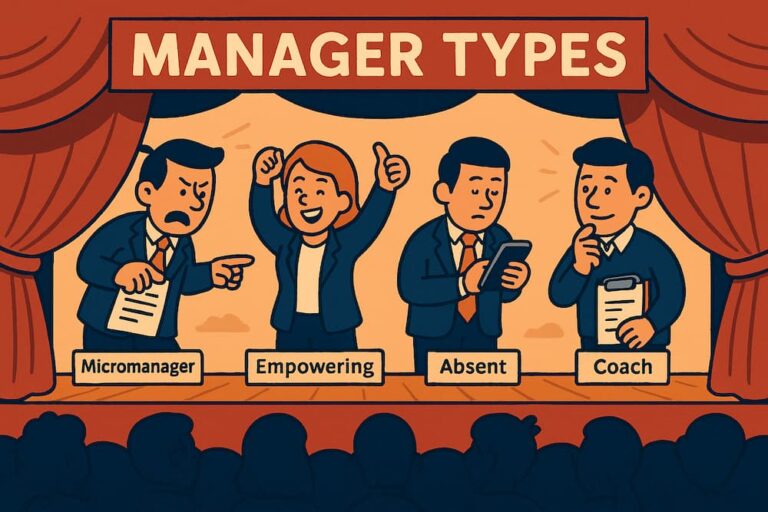
What Type of Manager Are You? Stop Guessing and Start Leading
View Article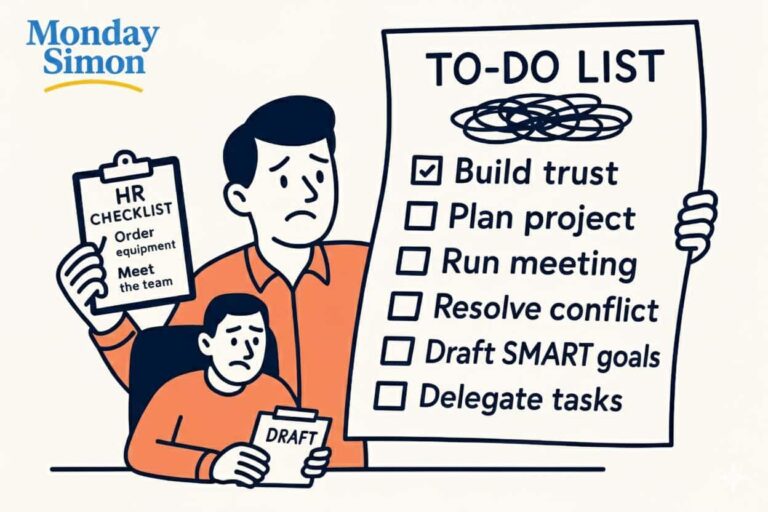
The New Manager Checklist : What to Actually do When You Become In Charge
View Article