
Key takeaways
Competencies are part of Monday SimonManager Development Program: 👉 Module 3:Team development training👉 Module 5:Performance management for managers
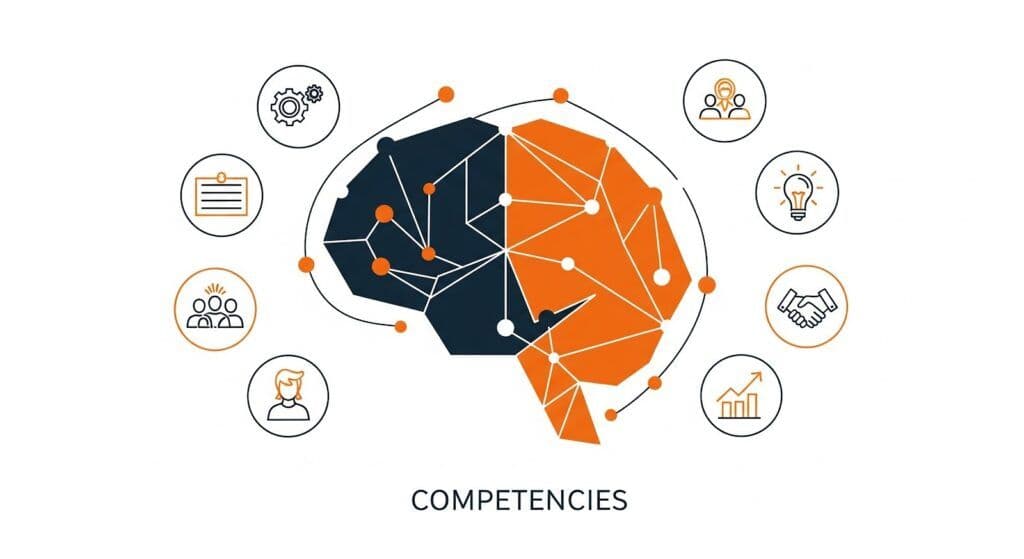
What are Competencies?
What are competencies? They are the observable skills, knowledge, and behaviors needed to crush a job. It's not about being "proactive". It's aboutexactlywhat someone does and how well they do it to deliver the results. Managing competencies is not “just” for HR. It is also your responsibility, as you own the development of your team.
Basically, you want to know which competencies are required for your team. Here is an example of a spider chart with competencies for the position of procurement executive
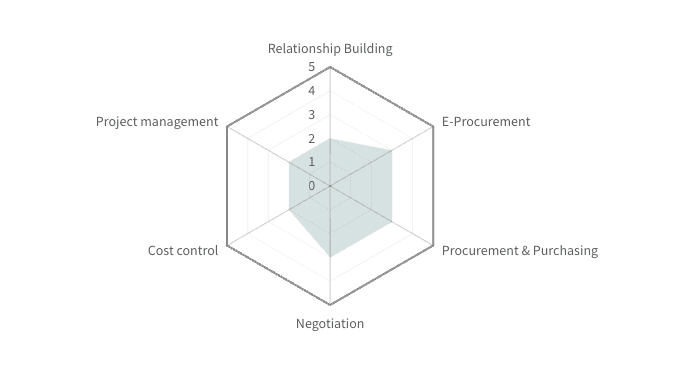
Each competency has a different level (you can’t expect all positions to be “expert” level).
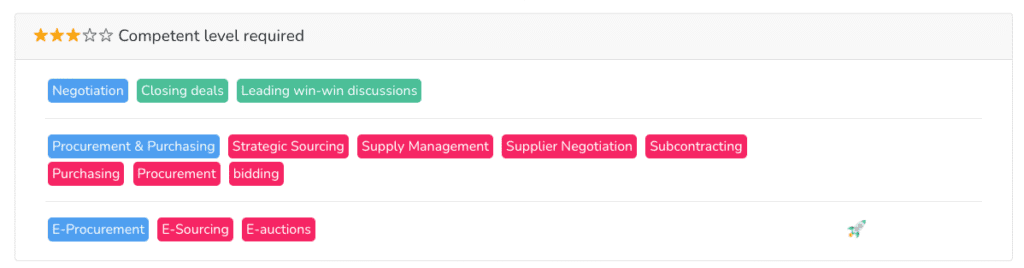
The common mistake companies make is sticking with the “bucket item.” It’s too broad to be useful. For example, the competency “Collaboration and Teamwork” is far too general. Break it down into specific behaviors, for both soft and hard skills, so your team clearly understands what it means in your company’s context.
Difference Between Skills and Competencies
Skills are the technical or functional abilities that allow someone to perform specific tasks. For example, Excel analysis, machine operation, or customer negotiation. Competencies, on the other hand, combine those skills with the right knowledge, mindset, and behaviors to achieve consistent results. For instance, “communication” is a competency that includes skills like public speaking, active listening, and adapting tone to the audience. Similarly, “leadership” combines decision-making, empathy, and accountability. While skills can often be taught quickly, competencies develop over time through experience and reflection. I always talk about competencies because they take into account "How" the job is done.
When to Use Competencies
You need to practically identify competencies when:
The Competencies Trap and How to Escape It
There are too many competencies to focus on. For a dedicated role, you may find 10 competencies. Not all of them should be a priority for development. I advise you to focus on the top 3 competency gaps depending on your development focus (whether you want to develop for a promotion or maybe to develop someone to meet the fundamental requirements of his/her role). Besides the trap of identifying too many competencies, a recurring mistake is to not integrate competencies into yourperformance managementsystem. If you don’t, you will ask people to develop themselves without any clear link to how this impacts their evaluation or their salary. Just likeKPIs and OKRs, competencies must be assessed consistently and scored the same way. I advise you to :
If you are looking for additional resources to manage your team, check out my resources on theManager toolspage.
MORE MANAGER DEVELOPMENT RESOURCES
This article is part of our team development resources.
Stay sharp for Monday
Practical resources to help managers lead smarter, faster, and with confidence.


