
Key takeaways
The bell curve performance rating is part of Monday SimonManager Development Program: 👉 Module 5:Performance management for managers
What is the bell curve
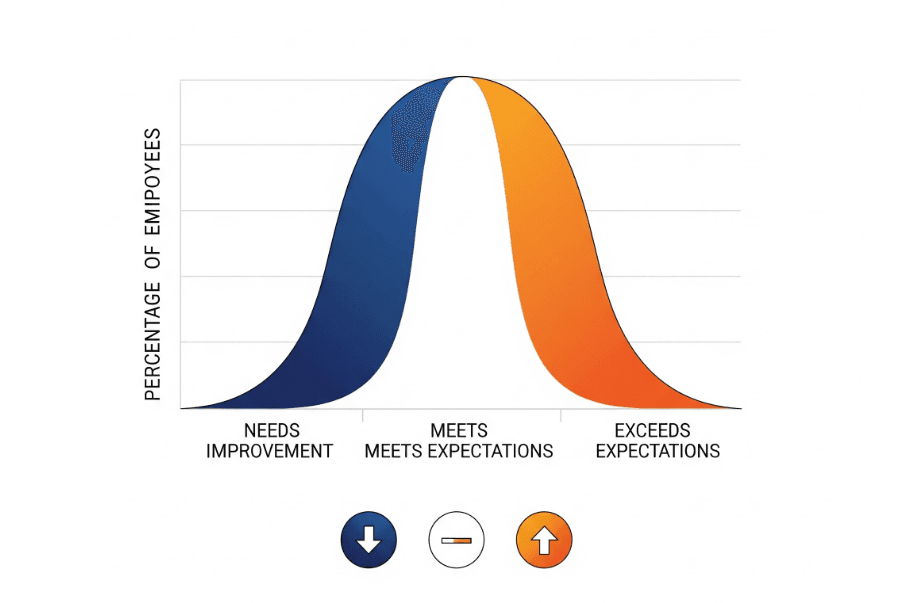
The bell curve is usually a term used by HR when it comes to yearly bonus allocation. As a manager, you must grasp that your team's performance does not align in a straight line. Instead, it naturally forms a bell curve.
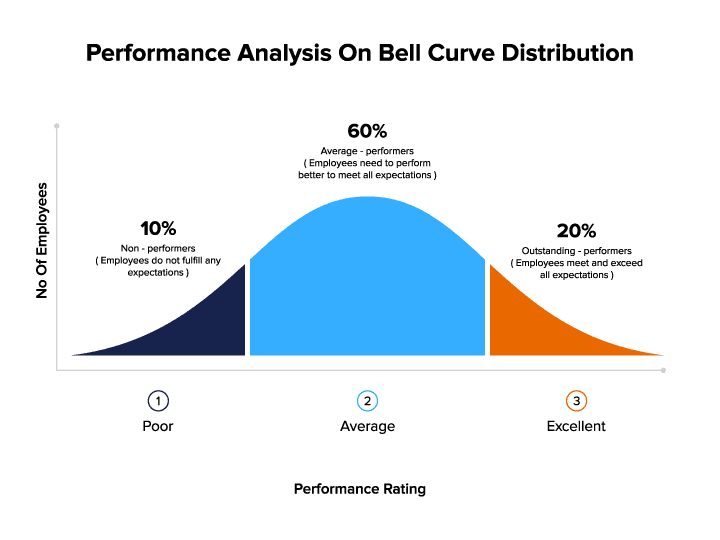
In any business, performance distribution typically looks like this:
The bell curve is not an absolute statistical model. It does not mean you should exactly have 10% of high performers in your team. I use it to explain to managers that not all performance is treated equally when it comes to performance management. Especially because:
So, you must understand the principles of the bell curve in yourperformance managementprocess.
When you need to give tough feedback, recommend someone for promotion, or justify a termination, you can rely on this curve for fairness. It ensures your decisions are defensible, based on facts, not feelings. You can identify who sits on the curve upon the achievements ofKPIs and OKRs. If you have not started to assign clear objectives to your team members, use myChatGPT for goal setting. Fair performance evaluation is a fundamental principle inperformance managementthat tells you that only a few people will be exceptional, a few people will be struggling, and the majority will cluster around average. It's a harsh reality, but ignoring it means you can't manage effectively.
Application in Management: Using the bell curve helps you:
When to Use The Bell Curve Principle
Apply the logic of The bell curve when facing these common managerial headaches:
What Actually Works with The Bell Curve
HR often mandates a strict split, for example 10% high, 80% average, 10% low, but your team might be exceptional (shifted right) or struggling (shifted left). Use theprincipleof the bell curve to force differentiation, not the rigid numbers.
The point of using the bell curve thinking is to fight the manager's natural tendency toward central tendency bias. If you genuinely believe that 90% of your team is a "top performer," you're either an incredible recruiter or you're grading on a curve so nicely that's becoming meaningless.
To implement this practically, you need to use Forced Ranking, or we can call it Performance Tiers. Take your team list and objectively rank them against each other usingmeasurable, business-driven outcomes(e.g., revenue generated, defects per project, or client retention rate). Once ranked, use the shape of The bell curve as a guide for your three core groups:
You must accept this model to ensure that resources (money, time, development opportunities) are allocated efficiently based on proven business impact. Any system that avoids the inherent reality of The bell curve is simply rewarding mediocrity.
Head over to myManager toolspage if you wish to discover additional resources for managers.
MORE MANAGER DEVELOPMENT RESOURCE
This article is part of our performance management resources.
Stay sharp for Monday
Practical resources to help managers lead smarter, faster, and with confidence.


