
Key takeaways
The 70 20 10 learning model is part of the Monday SimonManager Development Program: 👉 Module 3:Team development training
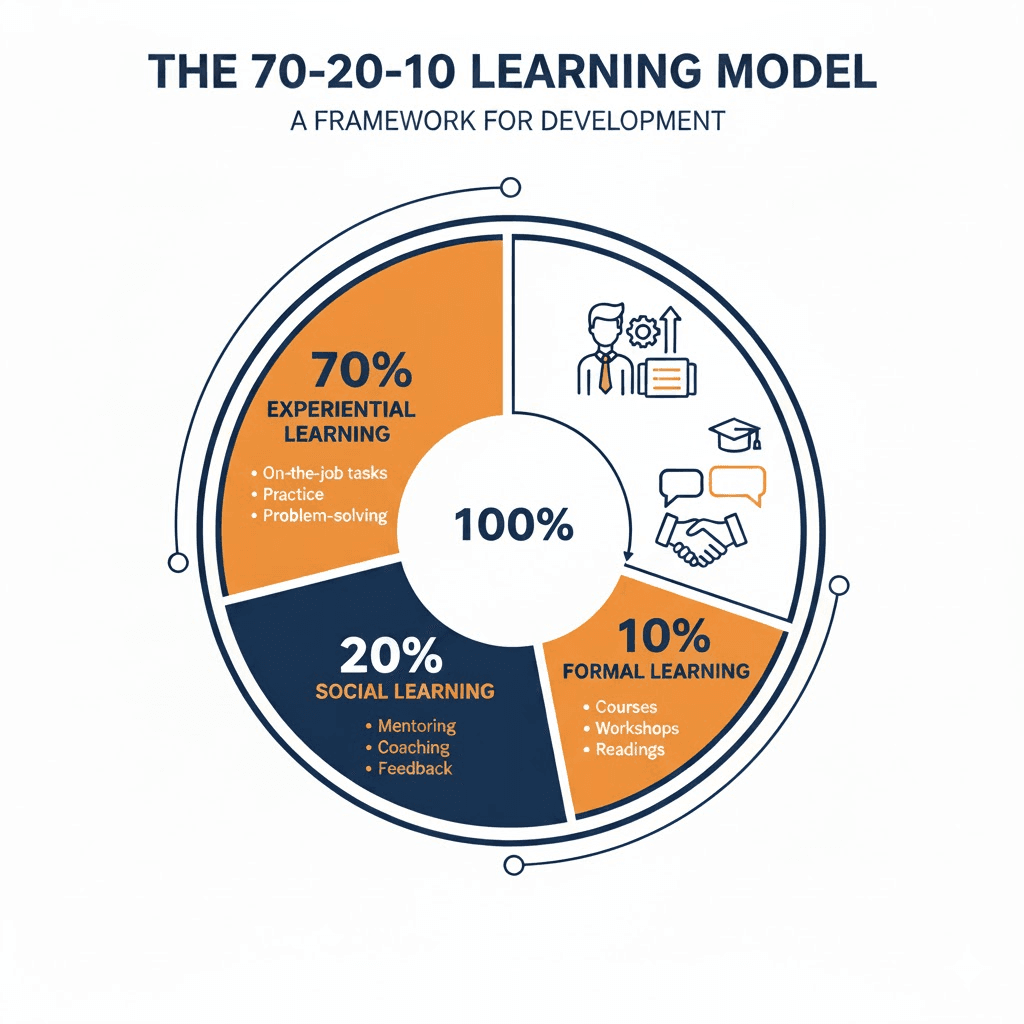
What is the 70 20 10 Learning Model?
The 70 20 10 learning model is a simple yet powerful ratio that describes how people learn best. It states that approximately 70% of learning comes from challenging job assignments (on the job), 20% comes from feedback (coaching, mentoring, and peer feedback), and only 10% comes from formal learning (classroom learning, online learning etc). In simple terms, the 70 20 10 framework is used as a structured action plan to create anindividual development plan (IDP)for employees.
The 70 20 10 learning model is a management principle. It tells where to prioritize effort and budget, to get maximum return on your development investment.
When to Use the 70 20 10 Learning Model
You should be applying the logic of the 70 20 10 learning model every time you discuss an employee’s growth, but it's essential in these specific scenarios:
My Take on the 70 20 10 Learning Model
Personally, I am a die-hard believer of the 70 20 10 learning model. Too often, companies think they will have people learning by sending them to fancy classes (online or offline). This formal learning part, of 10% is theeasiestpart, but it has thelowestimpact. The focus needs to be on curating the 70% and leveraging the 20% to ensure that learning really “sticks”.
1. Own the 70% - The On-the-Job Challenge: The 70% isn't just "doing work"; it is challenging work. It requires you, the manager, to deliberately assign projects that stretch the employee. This project must have real stakes and real consequences. The friction of the live environment, like the political negotiations and the budget constraints, is where the real learning happens. For example, leading a software implementation project is linked to the development of “Project management” skills.
2. Maximize the 20% - The Coaching Loop: The 20% manages the risk of the 70%. This 20% is all about feedback. Set up a mandatoryone-on-one meetingto follow in order to coach and give feedback on the progress and how to improve.
3. Use the 10% Smartly - Just-in-Time Knowledge: The 10% should be targeted and immediate. It’s just-in-time knowledge, not “just-in-case theory”. Only use formal training when a foundational concept is needed to unlock the 70% experience.
The success of the 70 20 10 learning model depends on the sequencing and whether or not it is tied to real performance outcomes. Otherwise, you are developing your staff without the return on investment.
Here is an example of the 70 20 10 learning model for the development of the competency “team management.”
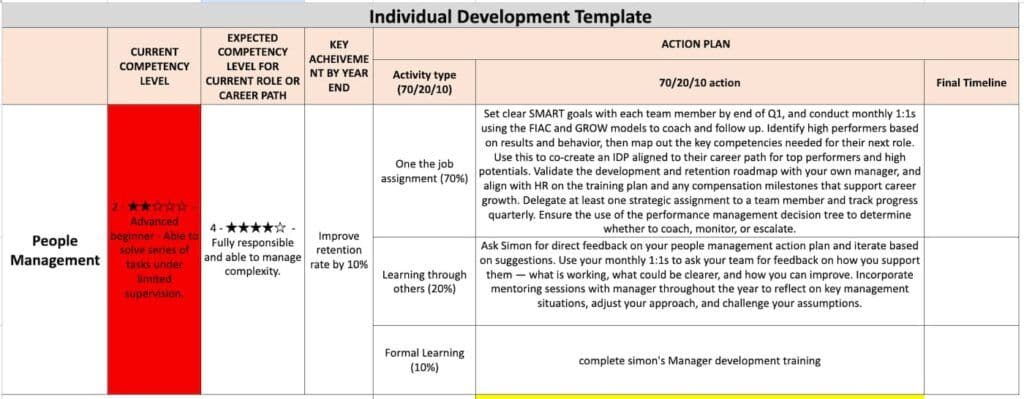
Go to mypersonal newsletterif you wish to download the template.
The benefits of the 70 20 10 Model
For additional advice on team management, check out the relevant resources on theManager toolspage.
MORE MANAGER DEVELOPMENT RESOURCES
This article is part of our team development resources.
Stay sharp for Monday
Practical resources to help managers lead smarter, faster, and with confidence.


