Key takeaways
- Identify Your “Sabotage” Default: Every manager has a recurring trap they fall into when stressed, whether it’s ghosting, rescuing, or micromanaging. You can’t fix your team until you realize the specific brand of chaos your management style is creating; recognition is the first step to moving from a “default” setting to intentional leadership.
- Coach the Team, Don’t Rescue Them: If you are a “Hero” or a “Micromanager,” you are trading short-term fixes for long-term team dependency and personal burnout. Your success isn’t measured by how many fires you personally put out, but by how well the team performs and solves problems when you are not in the room.
- Prioritize Presence and Prevention Over Reaction: Moving from a “Firefighter” or “Ghost” to a proactive manager requires a mental shift from reacting to the past to managing the future. High standards and honest feedback aren’t “mean”. They are a sign of respect for your team’s potential and the only way to build a team that scales without needing your constant intervention.
Table of Contents
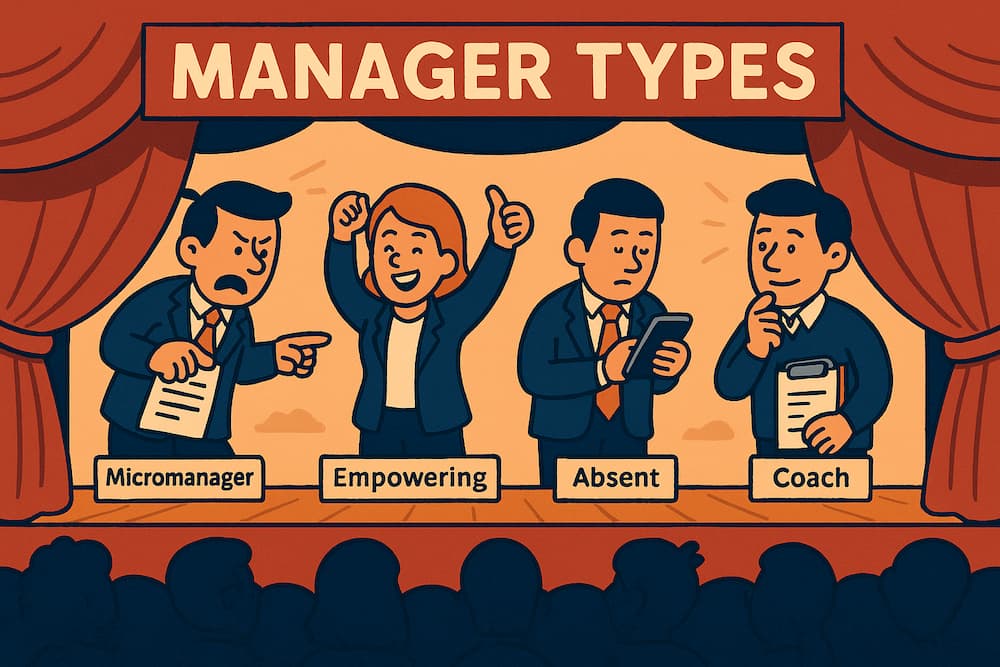
What type of manager are you? There are many articles that define what the different manager types ie the World Economic Forum’s 7 types of managers. Here I identify your manager’s style’s worst enemy.
Managers often fall into recurring traps, patterns that shape their leadership without them even noticing. Before you can fix your team, you have to know what kind of chaos you are creating because of your management style. Knowing what type of manager you are is the crucial first step.
I created this quiz so you can understand your management default type. Every manager (even the best ones) falls into a specific pattern when they’re stressed, overwhelmed, or haven’t done the deep work on their leadership style. That default setting is silently killing your team’s potential. These default management styles are largely explained in my people management training.
What type of manager are you? Six Management Types That Sabotage Your Team
These six types are the most common traps that line managers fall into when it comes to operational team management.
Type #1: The Ghost Manager
You know this one. They are never around when you need them. They are either trapped in back-to-back meetings, perpetually on a “critical project,” or just simply unreachable.
Their team spends half their time guessing what to do, and the other half waiting for decisions. They think they’re empowering their people by stepping back, but really, they are just abandoning them.
Key Problem: Absence kills accountability and engagement. Presence doesn’t mean control; it means availability. Your job isn’t to do the work; it’s to remove blockers and clarify direction.
Type #2: The Hero Manager
This manager type saves the day. Whenever there is a problem, a crisis, or a tricky email, they swoop in and fix it themselves. They thrive on the adrenaline of the rescue and get praised because the problem goes away.
But here’s the catch: every time you save the day, you teach your team to be helpless.
Key Problem: Heroes don’t develop people. They create dependencies. If you always rescue, you’ll always be needed but never scalable. You’re trading short-term fixes for long-term burnout.
Type #3: The Pleaser
The pleaser wants everyone to be happy. They crave harmony and avoid tough conversations at all costs. When performance drops or standards decline, they stay silent, hoping it will magically go away.
They think they are being kind by avoiding discomfort, but they’re actually damaging the team morale.
Key Problem: Avoiding discomfort protects no one. Honest feedback isn’t confrontation; it’s respect for their potential and your team’s standards.
“I understand. However, your accountability is X. Given the constraints, what specifically will you do differently next time to prevent the negative impact of Y?”
Type #4: The Firefighter Manager
With this manager, everything is urgent. Every day brings a new crisis. They spend their time reacting instead of preventing problems. They get a rush from putting out fires and mistake volume for impact.
Key Problem: Firefighters burn themselves and their teams by valuing reaction over planning. Prevention is more powerful than reaction. You are not being paid to react; you are being paid to manage the future and be in prevention mode.
Type #5: The Micromanager
Micromanager types check everything twice, approve every decision, and nothing moves without their input. They think they are ensuring quality but are really killing initiative and speed.
This stems from a lack of trust disguised as “high standards.”
Key Problem: Control kills confidence and capacity. If you can’t trust your team to fail occasionally, neither of you can grow.
Type #6: The KPI Robot
For this manager, everything is a number. Every conversation revolves around KPIs and OKRs metrics, and efficiency ratios. They forget people are human: with ambitions, emotions, and off days.
Key Problem: Metrics without meaning create disengagement. Results matter, but engaged, developing people produce them.
Monday Morning Action Plan: Shift Your Default Setting
So, what type of manager are you? Identifying what type of manager you are is useless unless you act on it. Here’s how to start fixing your management default immediately. Below are the top Dos and Don’ts related to each manager types:
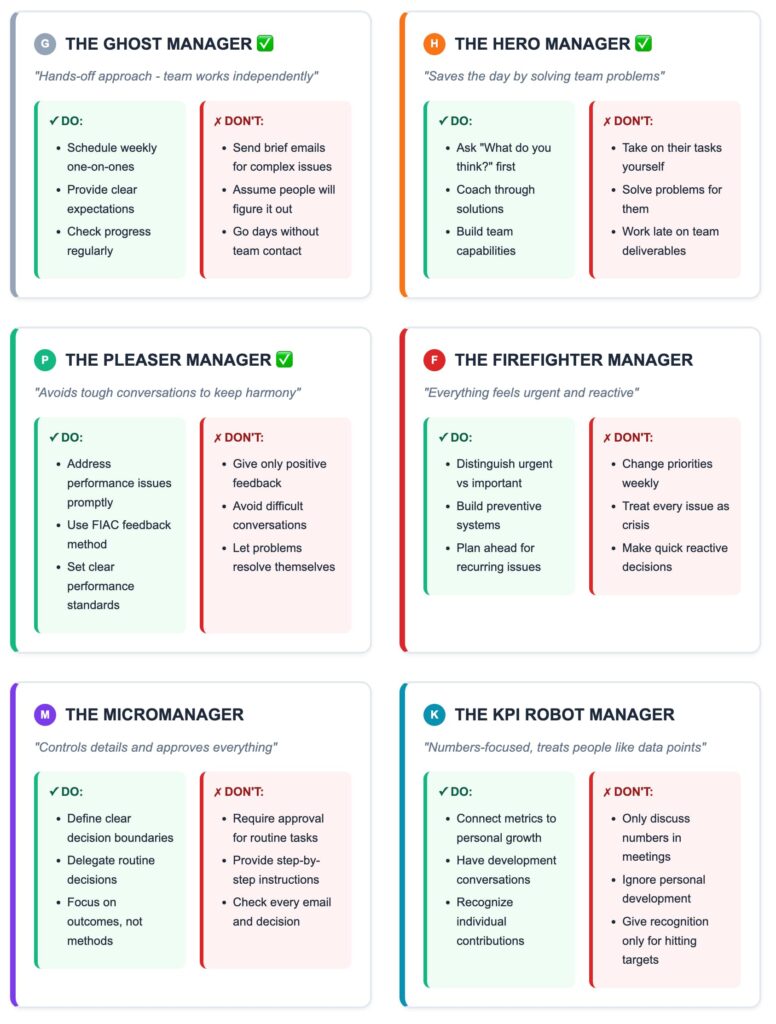
Identifying what type of manager you are is only valuable if you turn insight into action. Each management type requires small but consistent behavior shifts: Ghost Managers must become more present, Heroes must coach instead of rescuing, Pleasers must face discomfort, Firefighters must plan ahead, Micromanagers must trust, and KPI Robots must reconnect with people.
The key isn’t to change who you are overnight but to choose one new habit that breaks your default pattern. Do less reacting, more leading, and start on Monday morning.
What type of manager are you?
Stop guessing, start acting.
Once you know your management type by default, you can take targeted action that actually moves the needle: delegate better, coach smarter, and build a team that runs without chaos.
Here are additional resources to help you become a better manager:
Stay sharp for Monday
Practical resources to help managers lead smarter, faster, and with confidence.
The Manager Capability Scorecard: Audit Your Manager’s Maturity
View Article
Manager Horror stories : Management mistakes on the wall
View Article