Key takeaways
- Predict Performance with Factual Evidence: Stop hiring or managing based on “vibes” or vague impressions like “good attitude.” Use the STAR method (Situation, Task, Action, Result) to force people to provide behavioral proof. If they can’t describe the specific action they took and the measurable impact it had, they are hiding behind theory.
- Replace “How” with “Tell Me About a Time”: In interviews, ditch theoretical questions like “How do you handle stress?” and demand evidence. A candidate who actually delivered results will give you a concrete, four-step story; someone who didn’t will drift into “we” language or group credit.
- Strip the Drama from Feedback: When addressing performance issues, anchor your message in the Situation and Task to set the scene, describe the observable Action (not the person’s character), and conclude with the Result (the business impact). This turns a potentially emotional confrontation into a fair, factual conversation.
- Build an Objective Record: Use the STAR framework for all documentation, whether you’re tracking a high performer for promotion or a disciplinary case. By recording facts instead of opinions, you create a professional paper trail that stands up in HR reviews and protects you from bias or legal pushback.
Table of Contents
The STAR interview method is part of Monday Simon Manager Development Program:
👉 Module 6: Recruitment in practice
During an interview, the hiring manager’s main job is to identify past behavior patterns and make sense of them to predict future performance. That means your approach must be factual, not based on assumptions.
Most hiring mistakes happen because managers fall into common traps: the halo effect, confirmation bias, or simply relying on vague impressions. They talk about “good attitude” or “poor communication,” yet can’t describe what that actually looked like in practice.
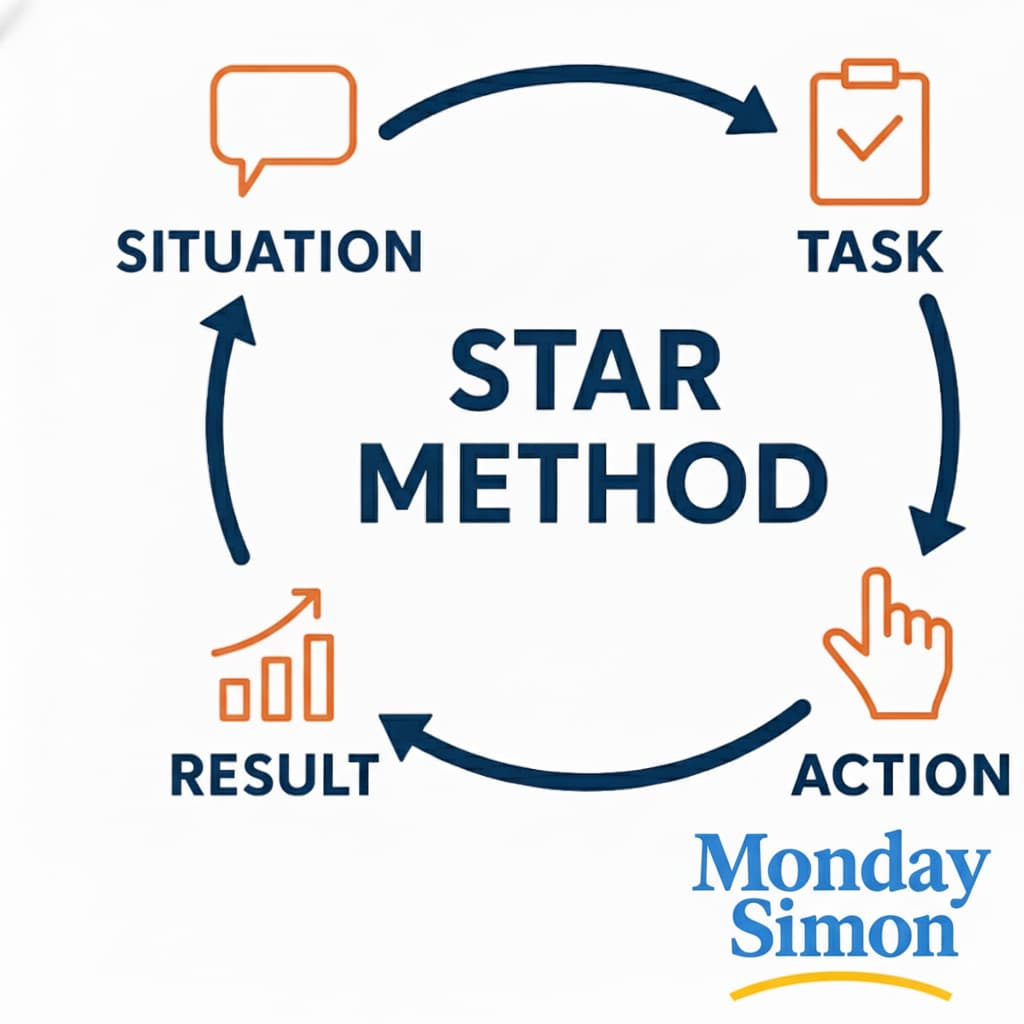
That’s where the STAR interview method comes in.
What is The STAR Interview Method?
The STAR method is a simple structure that is usually used in a structured interview to describe or analyze behavior in four steps:
- S – Situation
- T – Task
- A – Action
- R – Result
It helps you turn messy, subjective stories into clear, factual examples. Whether you’re interviewing, giving feedback, or documenting performance, the STAR interview method keeps everyone grounded in what really happened. This interview method can be also be used to evaluate competencies as part of a behavioral interview.
Think of it as a manager’s blueprint for turning chaos into clarity.
When to Use The STAR Interview Method?
You don’t need to use the start interview method for every casual chat, but when the stakes are high, or facts are blurry. Basically, when you want to double-check an important feel and you need factual evidence to base your opinion.
1. During interviews:
Use STAR questions to make candidates prove their experience.
Instead of asking, “How do you handle conflict?” say,“Tell me about a time you had to manage a conflict within your team. What was the situation, what did you do, and what was the outcome?”
You will instantly see who gives real, behavioral evidence versus who hides behind theory. I also recommend it to use it during phone interview screenings with candidates to save time on the selection process.
2. In performance reviews or coaching:
Use the STAR framework to address specific actions during performance management meetings with your subordinate(s)
“Last Tuesday, during the Acme Corp onboarding (Situation + Task), you didn’t check the client files before kickoff (Action), which led to a 20-minute delay and client frustration (Result).”
That’s a precise, fair feedback message. No emotion, just facts.
3. In documentation:
Perfect for tracking high performers or disciplinary cases.
When you describe facts using STAR, you are building an objective record that stands up in HR reviews, promotion discussions, or even legal cases where you need to provide fact based evidence.
How to Apply The STAR Interview Method
S + T = Context
Anchor the conversation: “Last Tuesday (S), we had the onboarding for Acme Corp (T).”
Now, everyone knows the event being discussed.
A = Action
Describe what was actually done or not done.
Avoid opinions—stick to observable behavior: “You skipped the checklist.”
R = Result
Connect the action to business impact: “The client noticed, and we lost time.”
The power of the STAR interview method lies here: tying actions to outcomes.
Why Ditching Vague Feedback (and Interviews) Matters
1. Immediate manager benefit:
STAR shortens conversations. You walk in with facts, deliver the message, and agree on next steps. No more 45-minute emotional loops.
2. Fairness and team cohesion:
Everyone knows what counts: specific actions and measurable results, not personality or favoritism.
3. Stronger business results:
When your team understands which behaviors lead to success, they repeat them. The same logic applies to hiring. STAR helps you identify candidates who actually demonstrated success, not just claimed it.
Example: Applying the STAR Interview Method in Real Hiring
You’re hiring a Project Manager.
Instead of asking, “Are you good at handling deadlines?” try:
“Tell me about a project where deadlines were tight. What was the situation, what did you need to achieve, what actions did you take, and what was the result?”
A strong candidate will give you measurable outcomes and concrete actions.
A weak one will drift into theory or group credits.
Within two questions, you know who truly delivered results.
How to Start Using STAR Right Now
- Add at least one STAR question to your next interview.
- Reframe one feedback message this week using Situation–Task–Action–Result.
- Document one case (positive or negative) using the same format.
- Update your recruitment scorecard and enforce it in your recruitment process.
You will immediately notice your communication becomes clearer, shorter, and more effective.
Final Thought about The STAR Interview Method
You can’t fix or hire what you can’t describe.
Your job as a manager is to define success and failure early.
The STAR interview method gives you the structure to do exactly that.
For a deeper dive into how to use the STAR interview method and other practical hiring frameworks, explore Module 6: Hiring for Managers in the Manager Development Program.
If you’d like to explore more practical manager tools to put these concepts into action, visit our Manager Tools page.
MORE MANAGER DEVELOPMENT RESOURCES
This article is part of our recruitment resources.
Stay sharp for Monday
Practical resources to help managers lead smarter, faster, and with confidence.
Structured Interview : The Proven Way to Hire Smarter and Reduce Mis-Hires
View Article
Behavioral Interview Guide: Ask Better Questions and Predict Real Performance
View Article