Key takeaways
- Prioritize Outcomes Over Duties: Before posting a job, define 3–5 measurable results the hire must deliver in their first year, like “reducing deal lifecycle by 15%” instead of just “supporting sales.” If you don’t define exactly what winning looks like, you’ll end up hiring for “busyness” rather than business impact.
- Kill the “Vibe” Check with Objective Metrics: Subjective feelings lead to expensive hiring mistakes. Use a standardized 1–5 rating system for every competency and cultural fit, and define what a “1” looks like to prevent interviewers from giving a “generous 3” to a candidate who doesn’t actually have the goods.
- Build the Scorecard Before the Job Description: Don’t just copy-paste an old JD. Create your scorecard first to identify the non-negotiable success criteria. This forces you to update the job description so it reflects the current business reality, ensuring you are interviewing for what the role needs now.
Table of Contents
The recruitment scorecard is part of Monday Simon Manager Development Program:
👉 Module 6: Recruitment in practice.
Beyond being able to find the right people for the job, a common hiring mistake is to forget to define what a good hire is before you start the recruitment process. You need objective structure, not subjective “vibes.” That’s why every manager needs to know the recruitment scorecard.
What is a Recruitment Scorecard?
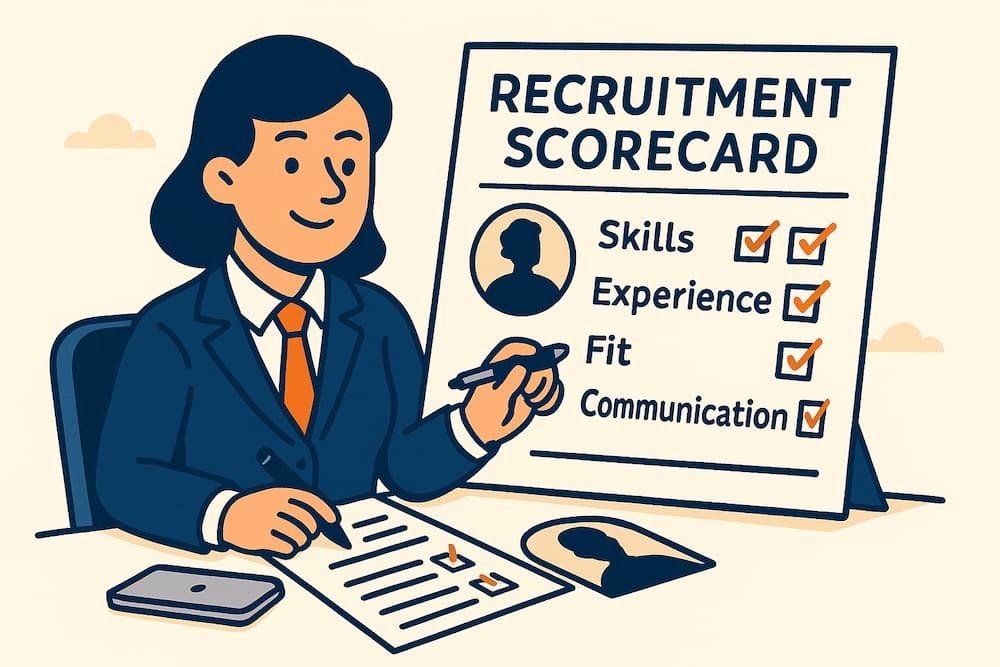
A recruitment scorecard is a standardized document that defines the specific, measurable outcomes, competencies, and cultural fits required for a role before the first interview happens. It moves the hiring decision from a subjective feeling to an objective data comparison. The scorecard is usually embedded in modern recruitment software, or it can be just an Excel sheet that helps you rank candidates based on objective criteria.
This scorecard must guide a structured interview process. If the questions are consistent between candidates (using behavioral interview techniques or the STAR interview method), the scorecard must be updated so you can compare candidates fairly based on their responses.
In short, the scorecard acts as your accountability tool. It ensures everyone involved in the hiring process is evaluating candidates against the same, non-negotiable success criteria.
When to Use a Recruitment Scorecard
You should be using a scorecard for every single hire, especially for the following situations:
- High-Impact Roles: When hiring for a leadership position or any role tied directly to a core business KPI (e.g., a lead engineer, a key account manager etc).
- Team Expansion: When multiple team members are interviewing, you need to ensure rating consistency and avoid individual bias.
- Troubleshooting Turnover: When your team has had high turnover in a specific role and you need to identify what skills were consistently missed in past hiring rounds.
How to Build a Recruitment Scorecard That Actually Works
A recruitment scorecard lists results. This is where the work begins, and it happens before the job posting goes live.
1. Define the Non-Negotiable Outcomes (Results): This is the most critical step. For the first 12 months, what are the 3-5 measurable results the person must deliver? Do not list duties. For a new sales engineer, an outcome isn’t “Support the sales team”; it’s “Reduce average deal lifecycle by 15% using technical consultation”. These outcomes form the top section of your recruitment scorecard. Every question in the interview must link back to proving past success in delivering a similar outcome.
2. Define Competencies and Culture Fit: The middle section of the recruitment scorecard lists the core skills (e.g., data analysis, stakeholder negotiation) and the required behavioral fit (e.g., proactive communication, autonomous problem-solving). You must rate each of these, assigning a clear weight. Maybe a scale of 1 to 5, where 5 is “Exceptional, exceeding expectations.” Crucially, you must also define what a 1 looks like to stop low performers from being rated a generous “3.”
3. Use the Scorecard as a Training Tool: Once the recruitment scorecard is built, it dictates the interview process. Assign specific competencies to specific interviewers. This disciplined use of the recruitment scorecard ensures a structured, defensible hiring decision, forcing objectivity and consistency.
Why the Recruitment Scorecard Drives Results
Hiring is the single highest-leverage activity you perform. Getting it wrong costs you six months of wasted salary, management time, and lost opportunity. The hidden cost of hiring is higher than what you think!.
- Ensures Role Clarity: It forces the hiring manager (you) to define exactly what success looks like, which is the foundation of effective delegation and performance management later.
- Mitigates Bias: By relying on a weighted, objective, pre-defined set of criteria, the recruitment scorecard drastically reduces hiring based on personal chemistry or shared interests, leading to better, more diverse hires.
- Predicts Future Performance: When you interview for past results against required outcomes (as defined by the scorecard), you are using data, not hope, to predict how the person will perform on your team.
To my view, you should come up with the recruitment scorecard before drafting the job description, or at the same time. It ensures your key criteria are aligned with the job description, and it also forces you to update the job description (which is too often obsolete). To support, you can use my Custom ChatGPT for job descriptions.
If you are looking for additional resources to manage your team, check out my resources on the Manager tools page.
MORE MANAGER DEVELOPMENT RESOURCES
This article is part of our recruitment resources.
Stay sharp for Monday
Practical resources to help managers lead smarter, faster, and with confidence.
How to Master KPIs and OKRs for Team Management
View Article
How Competencies Drive Talent Retention
View Article