Key takeaways
- Own the Process: Recruitment is a critical leadership skill, not just HR’s job. You are the one accountable for the decision and the outcome
- Define Success First: Before sourcing, create a precise Recruitment Scorecard and Job Description simultaneously to clarify mandatory requirements and KPIs.
- Speed is Critical: Commit to providing candidate feedback (CVs/interviews) within 24 hours to prevent high-performers from accepting offers elsewhere.
- Plan the Onboarding: The recruitment process is not complete until you have a structured plan for the new hire’s first 90 days to ensure they start delivering value fast.
Table of Contents
The Recruitment process is part of Monday Simon Manager Development Program:
👉 Module 6: Recruitment in practice.

What is a Recruitment Process?
The recruitment process is all the steps required to perform a recruitment from its request until its successful placement. I usually include the onboarding steps in the recruitment process too. To make it simple, it is just the system you use to get a great human being sitting at your team’s empty desk. It starts when you feel the pain of that open role and ends when the new hire starts performing. It’s about clarity, speed, and the selection process to filter out mediocre candidates and select the right ones. A slow, bureaucratic recruitment process is preventing good hires from joining your company.
This short article focuses specifically on the recruitment process, simplified for managers. The goal is simple: help you clearly understand each step so you can own your part.
Winning the Talent War with a Clear Recruitment Process
Recruiting isn’t just HR’s job, it’s a critical leadership skill. Get it right, and your team thrives. Get it wrong, and you hemorrhage time, money, and morale. The collaboration between the manager and HR is often underestimated. If you want to learn more about the HR point of view when the hiring process goes wrong, read my article on what happens when managers hire without HR approval.
Download this simple recruitment process chart and tailor it to your organization’s hiring standards.
Phase 1: Defining the Need
| Step | Explanation (What & Why) | Manager Action |
| 1. Recruitment need | A business gap (new project, turnover, overload) appears, and the current team cannot hit targets. This is your initial justification. | Clarify: Define the exact problem this hire solves and the impact of not hiring. |
| 2. Meeting Line Manager & N+1 | Alignment with your direct manager (N+1). The objective is to confirm the need, budget, priority, and timeline. | Come with Facts: Present data (KPIs, workload) to prove the hire is essential and not just a “nice-to-have.” |
| 3. Personnel request form filled | The formalization of the validated need. You complete the internal request for headcount, specifying the role, level, budget, and justification. | Fill Clearly: Vague forms cause HR/Finance delays. Be precise on level, salary, and justification. |
| 4. Internal job description filled with the recruitment scorecard. | In parallel, you detail the role’s mission, key responsibilities, KPIs, and competencies. HR often assists with formatting. | Focus on Success: Describe what success looks like in the role, not just a generic skill list. |
| 5. Recruitment approval | The final decision point. N+1, HR, and Finance validate the request against headcount and budget constraints. | Be Ready: Defend the cost, team structure, and why alternatives (e.g., automation) are insufficient. |
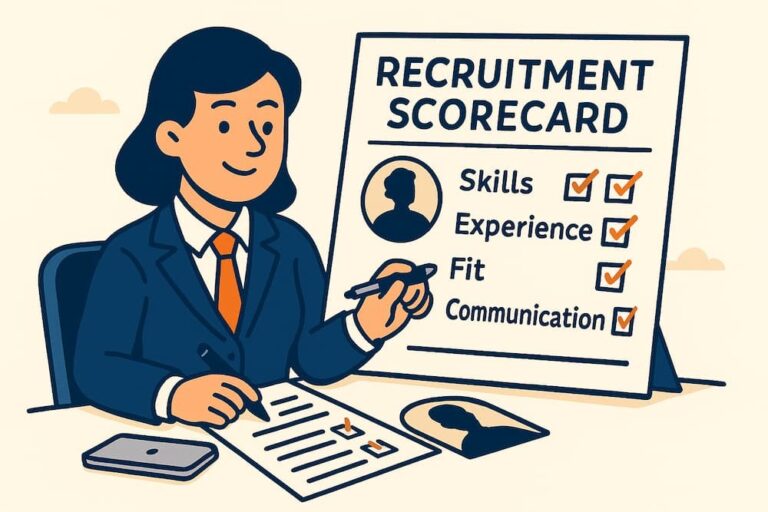
The key success factor in this Phase 1 is to be able to have a clear recruitment scorecard that clarifies the mandatory requirements. In my view, the recruitment scorecard shall be done at the same time as the job description.
LEARN MORE
Learn more about the recruitment scorecard
To ease the process, use my Chatgpt for job descriptions. To open the job requisition as a next step, use my personnel request form template and adapt it to your company’s requirements.
Download the Personnel Request Form Template
Phase 2: Sourcing & Screening
| Step | Explanation (What & Why) | Manager Action |
| 6. Meeting Line Manager & Recruiter | Kick-off meeting with the recruiter before going to market. Align on the exact profile, sourcing channels, timeline, and who does what. | Share Examples: Provide concrete examples of good performers and specific “deal breakers” to sharpen the search. |
| 7. External job ad | The role is published externally (job boards, LinkedIn). The wording is critical as it’s the market’s first impression. | Review Once: Scrutinize the job ad. If the ad is unclear, your candidate pool will be equally unfocused. |
| 8. Internal recruitment / promotion | Simultaneously, the opportunity is promoted internally to leverage existing talent. Internal candidates can apply or be nominated. | Think Ahead: Proactively identify potential internal moves or promotions that could address the need. |
| 9. Debriefing Recruiter / Line | The first market feedback loop. The recruiter shares early data (applications, quality, salary trends). | Decide Quickly: Based on data, decide if the criteria, budget, or timeline must be adjusted. |
| 11. Screening | The entire pipeline of candidate evaluation: CV review, phone screens, assessments/tests, and initial interview rounds. | Respect Timeline: Commit to giving feedback within 24 hours of receiving CVs or conducting a screen. |
Phase 3: Selecting and Onboarding
| Step | Explanation (What & Why) | Manager Action |
| 12. Debriefing Recruiter / Line Manager | Post-interview alignment. Review and rank all interviewed candidates, deciding who progresses and who is rejected. | Give Factual Feedback: Provide clear, objective reasons for your evaluation, avoiding vague “gut feelings.” |
| 13. Decision to hire | The formal final decision point based on all accumulated data (interviews, tests, references). You also confirm the salary and start date parameters. | Own the Decision: The team’s performance is your responsibility. Own the choice; HR facilitates, but you decide. |
| 14. If NO: Back to screening process | If no suitable candidate is found, the process reverts to sourcing and screening, often with adjusted criteria or offer. | Be Specific: Articulate precisely what was missing in the failed candidates to improve the next shortlist. |
| 15. If YES: Offering process | The successful candidate receives the formal offer letter and contract. This phase involves potential negotiation on terms. | Stay Close: Your responsiveness during the negotiation often determines whether the candidate accepts or declines. |
| 16. Onboarding process | Recruitment ends; integration begins. HR handles the administrative setup while you prepare the environment for success. | Plan the First 90 Days: Prepare clear objectives, training, and a structured plan so the new hire can deliver value fast. |
The key to ensuring a consistent candidate selection for the role offered is to apply a structured interview with the STAR interview method. It allows to compare candidates against the pre-defined requirements of the recruitment scorecard.
Benefits of a Clear Recruitment Process
When taking control of the recruitment process using these pragmatic steps, the benefits are immediate and directly impact your work life:
- Reduces team burnout: A high-performer hired quickly means your current team stops covering for the vacant role sooner.
- Massively improves business results: Every day that a seat is filled by someone who can deliver, you are generating revenue or solving a critical problem.
- Frees up your time: Stop spending your valuable managerial hours re-interviewing, onboarding, and ultimately managing out the wrong people. Getting the initial hire right saves you months of pain.
When you drive the process with discipline, decisions become faster, hiring becomes predictable, and your team stops operating in crisis mode. Most importantly, you regain control: you know exactly where each role stands, what to expect next, and how to move candidates forward without delays.
MORE MANAGER DEVELOPMENT RESOURCES
This article is part of our recruitment resources.
Frequently Asked Questions
How can I speed up the recruitment process without sacrificing quality?
The biggest time savings happen in Phase 1 (Defining the Need) and Phase 2 (Sourcing). The key is discipline and clarity:
Action 1 : Commit to giving candidate feedback (CVs and interviews) within 24 hours of receiving them. This ensures you secure a high-performer before a competitor does.
Action 2 : Ensure your Personnel Request Form and Recruitment Scorecard are precise upfront. Vague definitions cause delays.
What is the single most important document for a clear hiring process?
The single most important document is the Recruitment Scorecard.
Its Purpose: It is created alongside the Job Description and clarifies the role’s mission, key responsibilities, KPIs, and required competencies.
Its Value: A clear scorecard is mandatory for consistent candidate selection. It allows you to apply a structured interview and the STAR method to compare candidates objectively against pre-defined requirements, helping filter out mediocre candidates.
What happens after selecting a candidate?
After the decision to hire, the process transitions to the Offering process and then the Onboarding process.
Offering: The successful candidate receives the formal offer letter, and this phase involves potential salary negotiation.
Onboarding: This is where recruitment ends and integration begins. As the manager, you must plan the first 90 days with clear objectives and training to ensure the new hire delivers value fast.
What method should I use to ensure a consistent candidate selection?
You must apply a structured interview. This means asking the same questions in the same order to every candidate, and then evaluating them against the criteria defined in your Recruitment Scorecard. The most effective method to achieve this structure is the STAR interview method. This allows you to objectively compare candidates and reduces selection bias.
Stay sharp for Monday
Practical resources to help managers lead smarter, faster, and with confidence.
Structured Interview : The Proven Way to Hire Smarter and Reduce Mis-Hires
View Article
Behavioral Interview Guide: Ask Better Questions and Predict Real Performance
View Article