Key takeaways
- Diagnose “Can’t” vs. “Won’t” Immediately: Stop the excuses and determine if the issue is a skill gap or a motivation problem. If they lack the knowledge (Can’t), give them one focused training shot with a tight deadline; if they lack the drive (Won’t), transition straight to a formal Performance Improvement Plan (PIP).
- Use Irrefutable, Objective Metrics: Never tell a poor performer to “be more proactive” or “improve their attitude.” Set non-negotiable, measurable goals, like “complete 45 calls per week with an 8/10 rating”, so the evidence is factual and the outcome (improvement or exit) is binary and fair.
- Protect Your High Performers: Your best people will quit if they have to keep cleaning up someone else’s mess. Delaying the conversation erodes your credibility and drains team morale; dealing with underperformance is an act of respect for those who actually deliver results.
Table of Contents
Managing Poor performers is part of Monday Simon Manager Development Program:
👉 Module 5: Performance management for managers
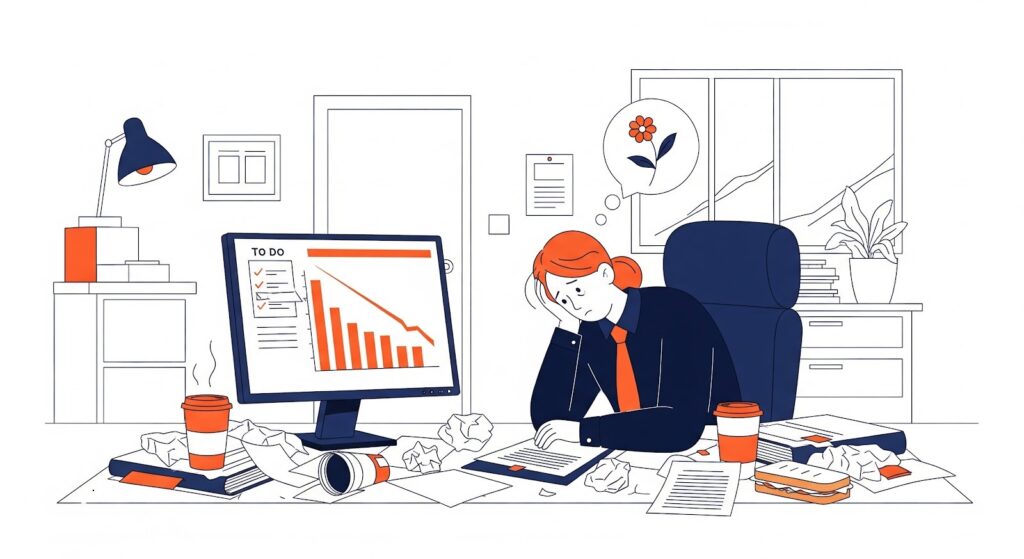
A poor performer is not someone who made a mistake last week. It’s the person whose output, attitude, or consistency creates drag on the team’s overall results, requiring you or others to constantly clean up after them. They consistently fail to meet the essential, documented expectations of their role, plain and simple. Their lack of performance might make better people quit, and they sit at the far left of the bell curve.
When to Deal with a Poor Performer
The biggest mistake managers make is letting this fester for months. You know you need to stop giving them excuses and start the process when you hit these points.
- The rest of the team is complaining privately or publicly about having to redo the poor performer’s work.
- You find yourself habitually assigning critical tasks to someone else, effectively working around the problem employee.
- The underperformance is directly impacting a client’s deliverables, budget, or team deadline for the third time in a quarter.
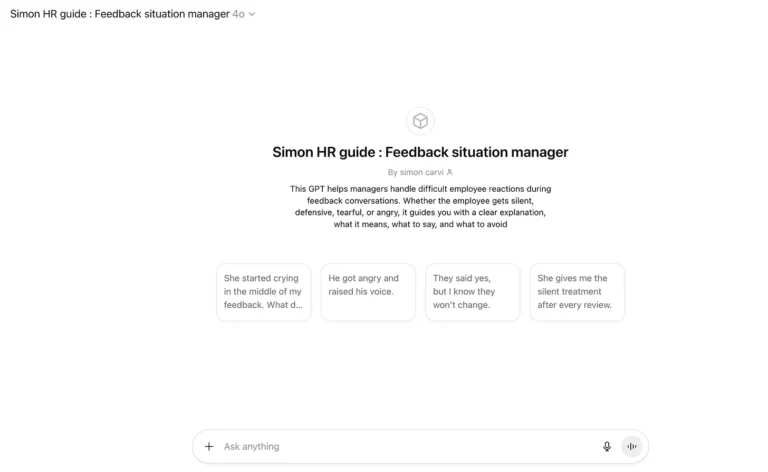
know that dealing with a poor performer can be stressful: we all want high performers on our team. But don’t postpone the discussion. Here is my custom ChatGPT for difficult situations as an additional supporting tool.
Note: You can truly acknowledge poor performance if you have a performance management process in place. This means they have not delivered their KPIs and OKRs, and you have factual evidence to label their performance as “below average”.
Why You Should Stop Wasting Time
The first action is to conduct a Diagnosis Session, not a scolding session. You need to quickly determine if the issue is Can’t Do (a skill/training problem) or Won’t Do (a motivation/attitude problem). Ask pointed, non-judgmental questions: “What specifically is getting in the way of you completing X by the deadline?” If they cite a lack of knowledge or a flawed system, you have a Can’t Do. If they cite reasons that sound like excuses, defensiveness, or blame-shifting, it’s usually Won’t Do. This distinction dictates your next move.
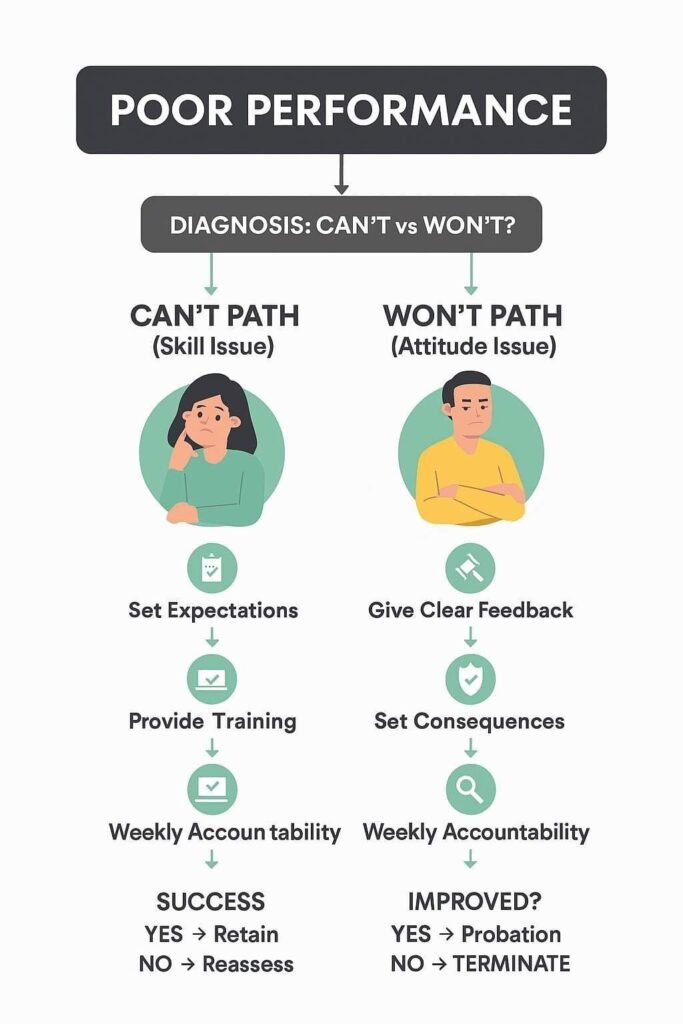
If it’s Can’t Do, give them one focused training opportunity (a specific course, a mentor, or a simple guide), and a short, non-negotiable deadline to apply it. If it’s Won’t Do, you immediately transition to a Performance Improvement Plan (PIP).
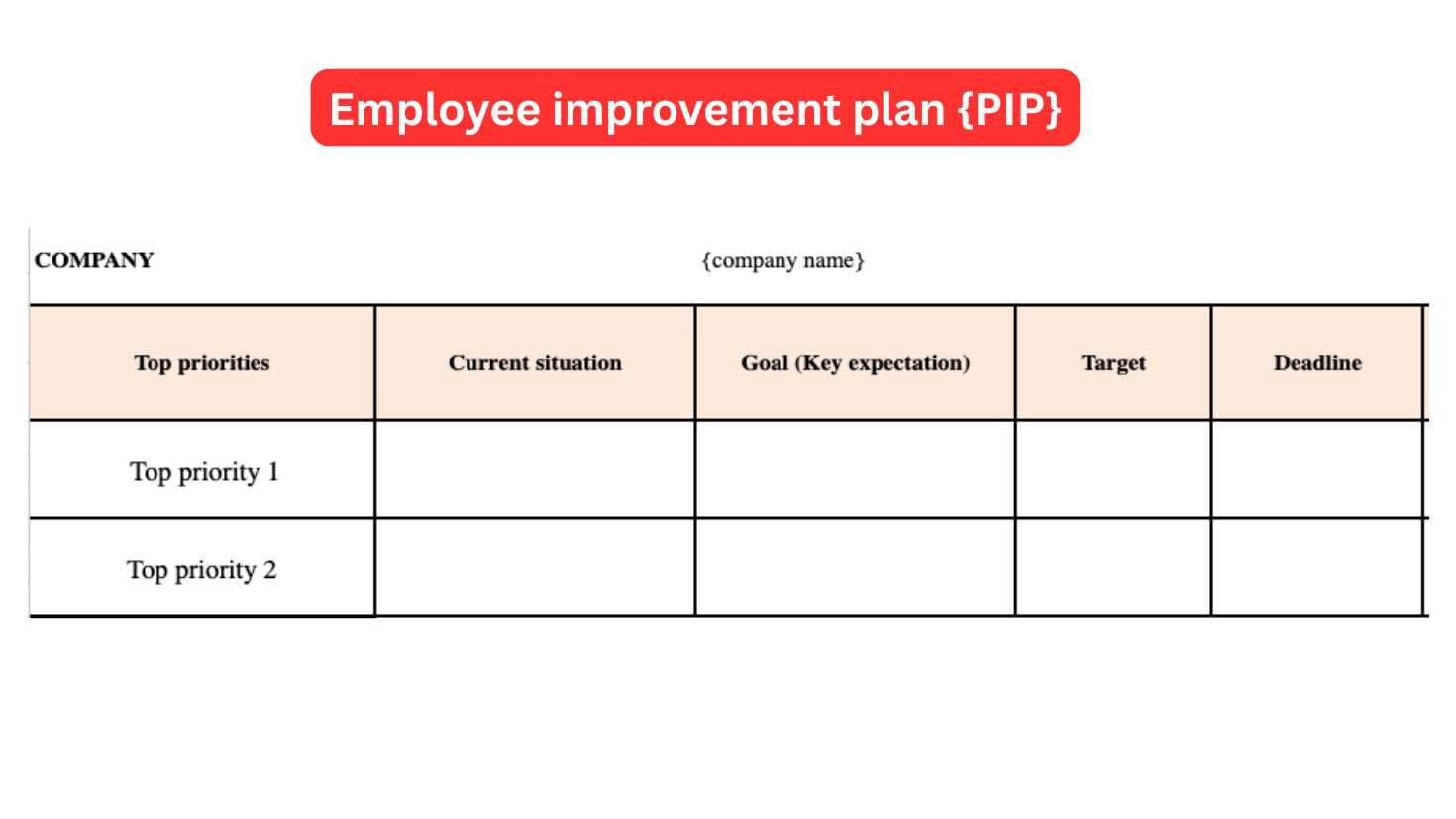
The PIP is a documentation tool with a high bar. Your second action is to make the PIP metrics irrefutable and objective. Don’t write, “Be more proactive.” Write, “Must complete 45 sales calls per week, and average client rating must be 8/10 or higher for 90 days.” The poor performer must either hit those measurable goals or exit the role. No exceptions.
Here is an example of PIP (performance plan):
Download PIP template
Download my PIP template for underperforming employees and fine-tune it to match your organization’s guidelines.
Why Dealing With a Poor Performer Immediately is Critical
Putting off this uncomfortable conversation doesn’t make it go away; it makes the problem worse for everyone else.
- Team Morale: The biggest hit to high performers is seeing a poor performer get away with dragging down the average. Resolving the situation shows you value effort and accountability.
- Cost of Inaction: Every hour you or your valuable team members spend fixing someone else’s errors is an hour of lost productivity on a high-value project. This has a direct cost to your business results.
- Manager Credibility: Delaying action erodes trust in your leadership. Your team needs to see that you manage performance consistently and fairly across the board.
The best way to give performance feedback to a poor performer is by using the FIAC feedback model. Use this feedback structure to ensure your employee is aligned with the issue at stake and the resolution path that comes with it.
Your third action today is to document the last three specific failures of your current poor performer and schedule the Diagnosis Session. You need to move fast. If you need robust templates for setting those non-negotiable, objective PIP metrics, you can find them on the Manager tools page.
MORE MANAGER DEVELOPMENT RESOURCES
This article is part of our performance management resources.
Stay sharp for Monday
Practical resources to help managers lead smarter, faster, and with confidence.
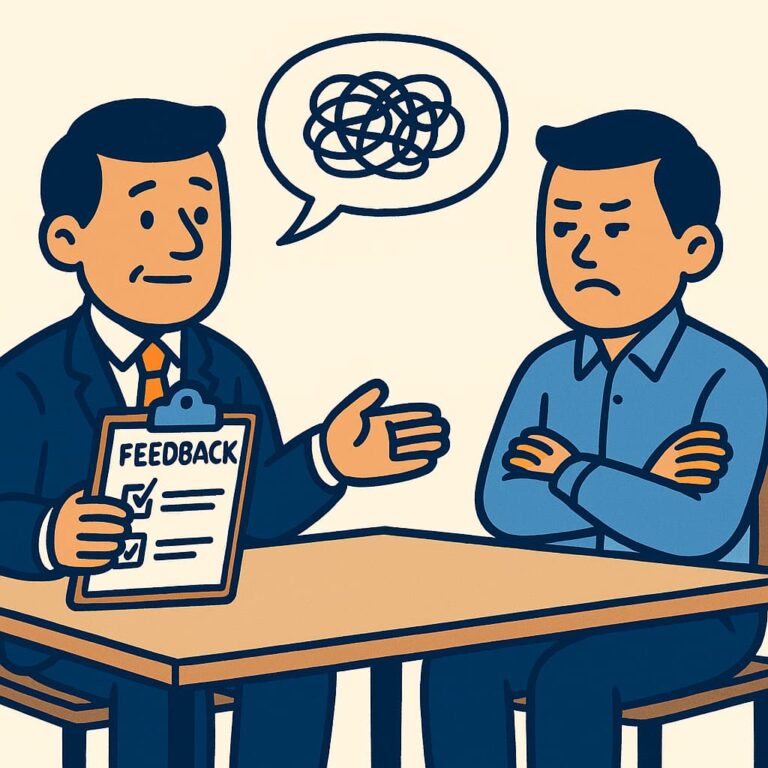
How the FIAC Feedback Model Fixes Employee Performance
View Article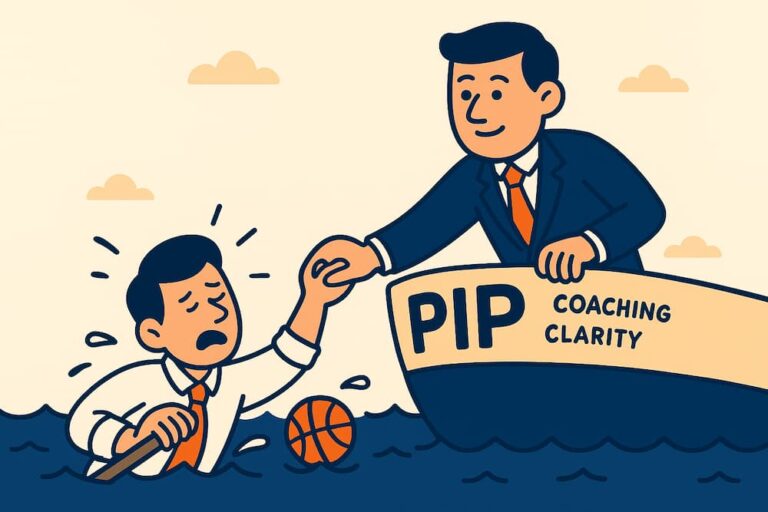
Performance Improvement Plan (PIP): Fix or Exit with Clarity
View Article