Key takeaways
- Shift from Training to Application: An IDP is not a “training request form” for certifications. To get real ROI, base the plan on the 70-20-10 learning model, where 70% of growth comes from high-stakes, on-the-job assignments. Stop asking what classes they want and start asking which business problem their development will help solve.
- Tie Development to Strategic Assignments: A strong IDP must be tethered to a specific mission-critical project. This ensures that as the employee grows, the business benefits immediately. By linking skill acquisition to measurable outputs, you turn abstract learning into a concrete performance goal.
- Provide “Manager Air Cover”: Development is a two-way street. Your role isn’t just to sign off on a plan; it’s to provide the necessary resources and “air cover” so the employee can take risks without constant oversight. Use weekly one-on-one meetings to track progress, remove blockers, and ensure the plan stays adapted to the employee’s pace.
Table of Contents
The Individual Development Plan (IDP) is part of Monday Simon Manager Development Program:
👉 Module 3: Team development training
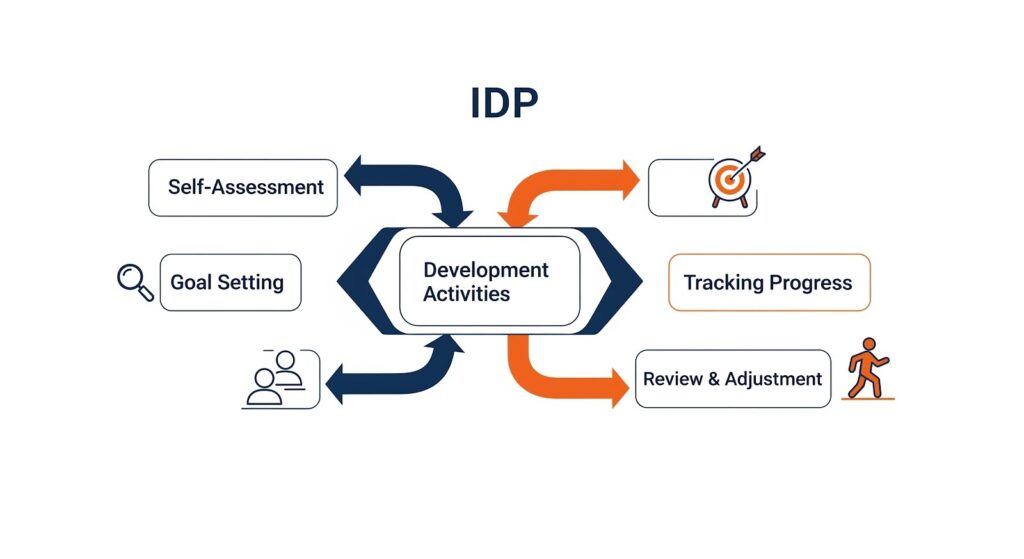
An Individual Development Plan (IDP) is nothing less than a personalized action plan designed to help employees develop their skills and competencies for career growth and to meet performance goals.
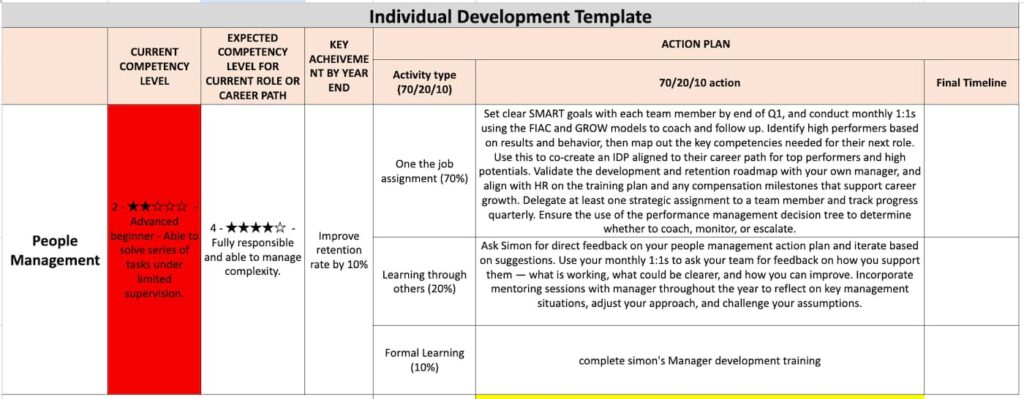
Download Huneety learning IDP template.
When to use the IDP
The Individual Development Plan (IDP) is not just for annual performance reviews and to look nice in your performance management system. You need this tool when:
- You want to retain the team on a dedicated career path: Your high potential employees require support to be developed to the next stage of his / her career.
- You have a mission-critical skill gap: Your team needs competency X (like advanced data modeling or client-facing presentation skills), and someone must own the development.
- You are delegating a big new responsibility: The employee needs specific, supported steps to build the confidence and competence to take it on without your constant oversight.
Stop Wasting Time on ‘Training’
The biggest mistake managers make with the Individual Development Plan (IDP) is treating it as a training request form.
The IDP needs to be largely focused on the job experience. The principle is application, not certification. To do so, rely on the 70 20 10 learning model.
Remember these 2 main points when designing the IDP:
- Tie the development plan to a strategic on the job assignment. This makes the goal measurable and relevant. Most importantly, you can measure the outputs.
- Define the Manager’s Support: The IDP is your plan, too. The employee needs resources, but more importantly, they need your air cover and time. This takes minutes but provides massive value.
Stop asking what training they want and start asking what business problem their development will help solve. That’s how you get buy-in, budget approval, and real results from every Individual Development Plan (IDP) you sign off on.
Why the IDP Is the Best Investment You Can Make
A well-executed Individual Development Plan (IDP) pays dividends:
- Reduces YOUR Workload: By delegating development through structured, time-bound tasks, you offload work while building capability, breaking the “If you want it done right, do it yourself” cycle.
- Boosts Retention (The Right Way): Your best people stay because they see a clear path forward, tied not to promises but to demonstrable, valuable skill acquisition.
- Closes Business Gaps Faster: You proactively develop the specific skills the market or the next project demands, turning weaknesses into competitive advantages.
However, a successful implementation of the IDP does not depend on “designing” the plan. Its success depends on the implementation. To ensure you the development plan is on track, a strict implementation of one on one meetings with your subordinates is critical to ensure the plan is always moving and adapted with the progress of your employees.
Admitting that standard training often fails is the first step toward effective management. The IDP forces focus and accountability.
Download the IDP Plan Template
If you want to know what it looks like, download my IDP template below.
If you wish for additional resources for managers, feel free to visit my manager tools page.
MORE MANAGER DEVELOPMENT RESOURCES
This article is part of our team development resources.
Stay sharp for Monday
Practical resources to help managers lead smarter, faster, and with confidence.
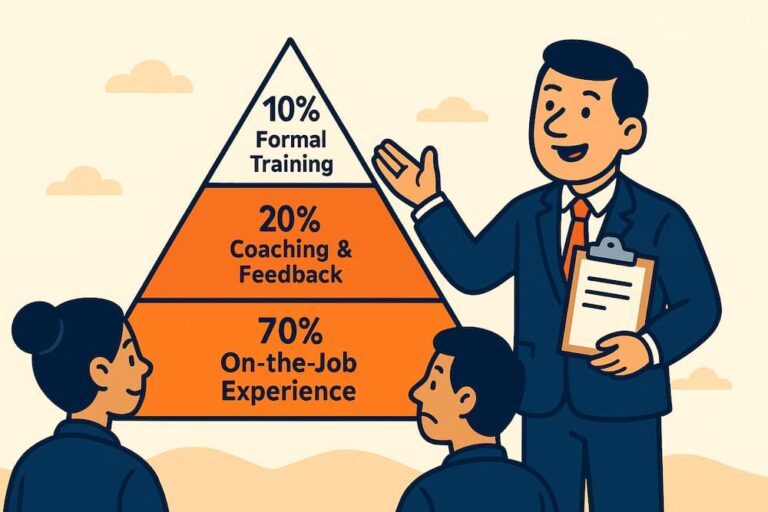
The 70 20 10 Learning Model: Learn Faster, Spend Smarter
View Article
How Competencies Drive Talent Retention
View Article