
Key takeaways
The GROW coaching model is part of Monday SimonManager Development Program:👉 Module 4:Coaching for managers
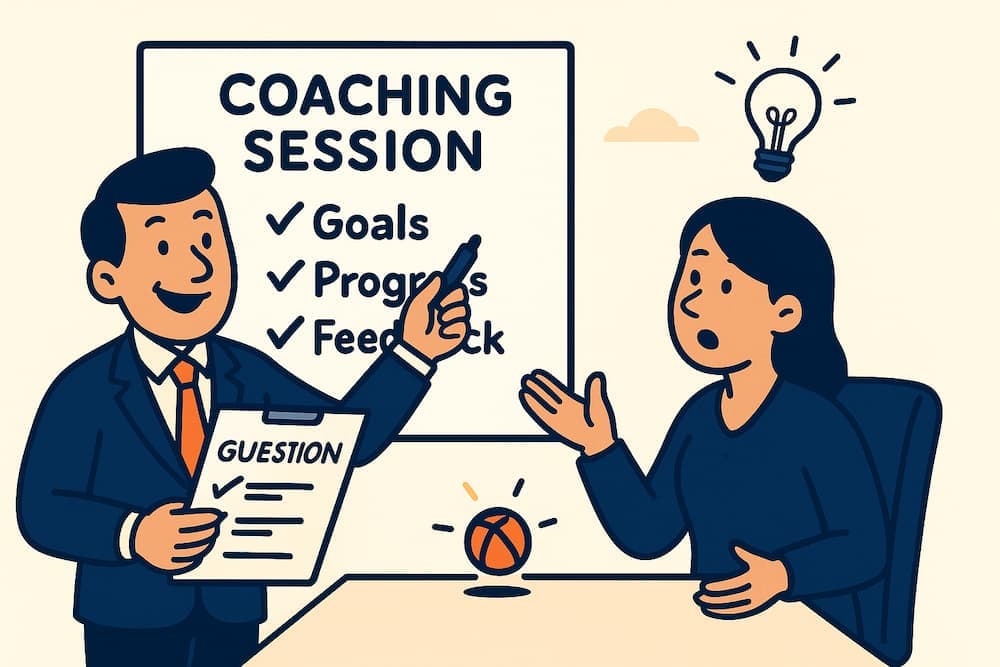
Too often, managers “show the way” instead of helping their team find solutions by themselves. This recurring mistake kills initiative and blocks your ability to delegate effectively. When you constantly step in with the answer, you set a precedent that you will always be there to fix things. Management isn’t about solving every problem, it's about guiding your team to their own solutions. That’s exactly where the GROW model comes in.
What is the GROW Coaching Model?
The GROW coaching model is a four-step conversational framework designed to guide an employee from a problem they own to a solution they create. It stands for Goal, Reality, Options, and Will. It flips the classic management dynamic: instead of you dispensing advice, you ask strategic questions.
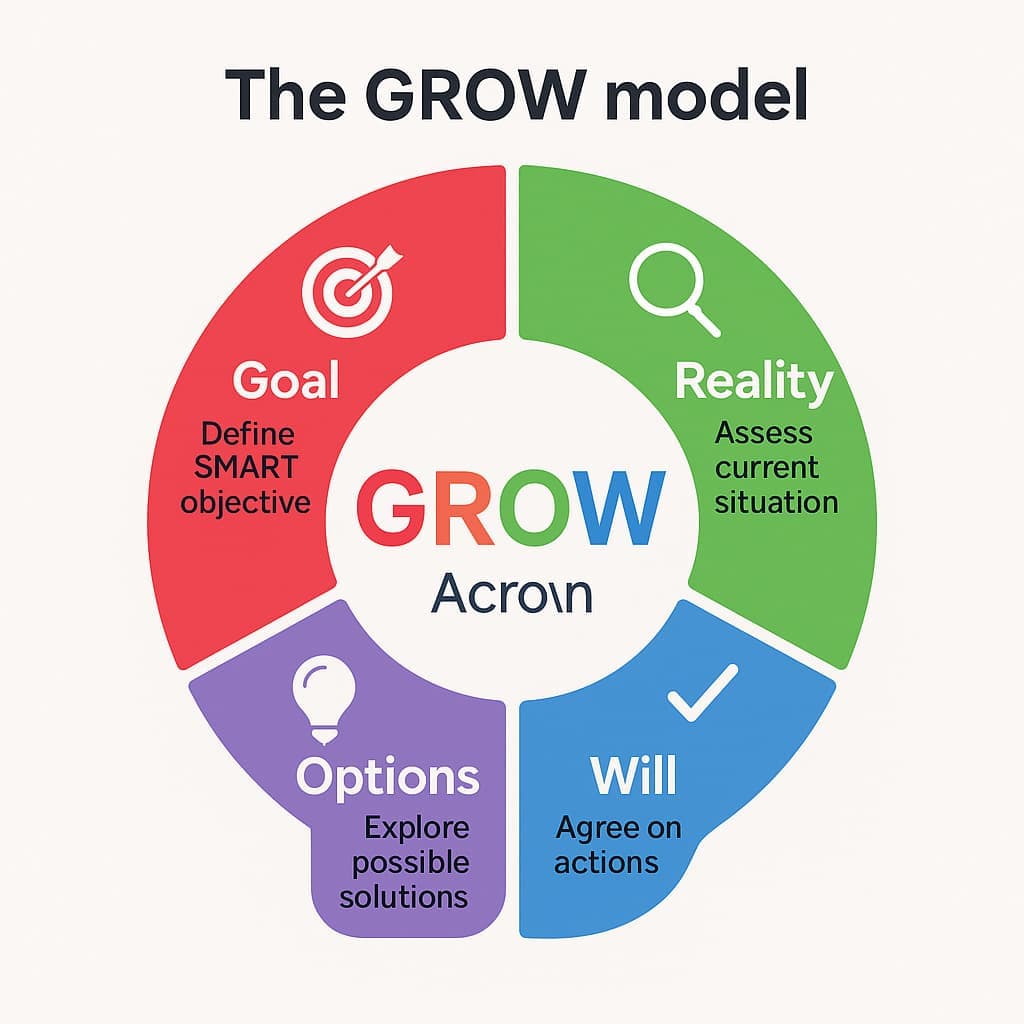
It’s about unlocking the intelligence and resources already sitting in the chair across from you, which saves you time and builds employee capability.
When to Use the GROW Coaching Model
The GROW coaching model shall not be used for an emergency crisis or for an operational meeting. It is used when the problem is complex, developmental, and when the employee already possesses most of the necessary information. Here are the most common use of the GROW model:
The Unconventional Manager’s Guide to the GROW Coaching Model
The power of the GROW coaching model is its deliberate, linear structure that forces the employee to confront the gap between where they are and where they want to be.
1. G - Goal. Pin down the target. Challenge the employee to define the specific, measurable outcome. Ask: "What does success look like for this specific problem, and how will you know when you've achieved it?"
Example Goal: Let's say an employee, John, wants to improve his public speaking skills because he often presents at team meetings. You would start by asking, "John, what specifically do you want to achieve with your public speaking?"
2. R - Reality. Ask the hard questions: "What have you tried so far, what were the results, and what resources do you already have?" This step often kills the problem right there, because the employee realizes they haven't taken action in the resolution. This reality check is critical to the effective use of the GROW coaching model.
Example Reality: "What happens when you speak in front of the team? What have you tried so far to improve your nervousness during public talks?"
3. O - Options. This is the brainstorming phase. Get the employee to generate their own solutions first. Then, you can challenge their assumptions or suggest a new, high-leverage option they missed, and development happens.
Example Options: "What could you do to manage your nervousness? What strategies have you seen work for others?" John might suggest practicing more, watching TED talks, or joining a Toastmasters club.
4. W - Will (or Way Forward). Secure the Commitment. The whole point of the GROW coaching model is action. Ask: "Based on these options, which one will you commit to implementing first, and by when? What obstacles might stop you, and what help do you need from me?"
Example Way Forward: Finally, you help John commit to a specific action, "Which of these options will you start with, and when?" He decides to practice with a colleague twice a week before the next meeting.
Why the GROW Coaching Model is Your Best Investment
Learning to coach rather than just delegate is the mark of a manager ready for the next level. The impact goes straight to the business results.
Coaching your own team is a skill you practise, and it is easier to learn once someone has coached you first. That is what an hour with a Monday Simon coach is for.
My advice to managers is to stop solving your team's problems for them. Instead, it is far more rewarding to shift your focus to training them to lead. Implement the GROW coaching model in your next one on one this week. You can train yourself to prepare a one on one using the GROW model using my customGPT for one on ones. If you need more Manager resources, click on this link to check out myManager toolspage. I regularly publish actionable resources for managers.
MORE MANAGER DEVELOPMENT RESOURCES
This article is part of our feedback and coaching resources.
Stay sharp for Monday
Practical resources to help managers lead smarter, faster, and with confidence.


