Key takeaways
- Distinguish Future Capacity from Current Results: High performers are your “engine” for today, but High Potentials (HiPos) are your leaders for tomorrow. Never assume a top performer is automatically ready for management; instead, look for the “raw materials” of leadership: a fast learning curve, deep alignment with company values, and the drive to influence others.
- Retain through Strategic “Stretching” and Visibility: HiPos are the first to leave when they feel stuck. Keep them engaged by using the 70-20-10 model to assign high-stakes projects outside their comfort zone where they can test their decision-making under pressure.
- Build Your Own Leverage and Succession Safety: Identifying HiPos early is your insurance policy against a leadership crisis. By proactively preparing team members to step up within 12–24 months, you increase your team’s total capacity, allowing you to delegate complex tasks and focus on the high-level strategic decisions that matter most.
Table of Contents
The High-Potential is part of Monday Simon Manager Development Program:
👉 Module 5: Performance management for managers

What is a High Potential
High potential, or ‘HiPo’ are employees who not only perform well today but have the capacity to take on leadership roles in the future. They exhibit:
- Aptitude: A quick learning curve, adapting to new challenges with ease.
- Commitment: A deep alignment with your company’s values and vision.
- Drive: An internal motivation to grow, lead, and influence.
High potentials are not just about what they do now, they are about what they can become. They show signs of being able to handle more responsibility, lead teams, and drive strategic initiatives.
High Potential vs. High Performers: Understanding the Key Differences
As a manager, you are often tasked with identifying and nurturing talent within your team. Two terms you will hear frequently are ‘high potential’ and ‘high performer’. While they might seem similar, understanding their differences is crucial for strategic talent management. Let’s break this down in a way you can use on Monday morning.
What is a High Performer? High performers are the individuals who consistently exceed expectations in their current roles.
They:
- Hit or surpass their KPIs and OKRs regularly.
- They are reliable, often needing minimal supervision.
- Deliver results that make your team shine.
Think of them as the engine of your current operations. They are the ones who keep things running smoothly, often making their job look effortless. But remember, high performance in one’s current role does not automatically translate to leadership potential.
Developing high-potential employees is about preparing the people who will carry your team and your business in the next one to two years. High potentials are people who can grow into larger roles, handle more complexity, and lead others with confidence.
Below is a simple, practical way to spot them and develop them without turning this into a big HR exercise.
How to Develop High Potentials
High potentials grow fastest when they are stretched, supported, and visible.
The best development tools are simple:
- Mentorship
Pair them with a leader who can guide them, challenge their thinking, and help them navigate decisions they have never faced before. A good mentor shortens learning cycles.
You can use my ChatGPT for coaching and feedback. - Stretch assignments
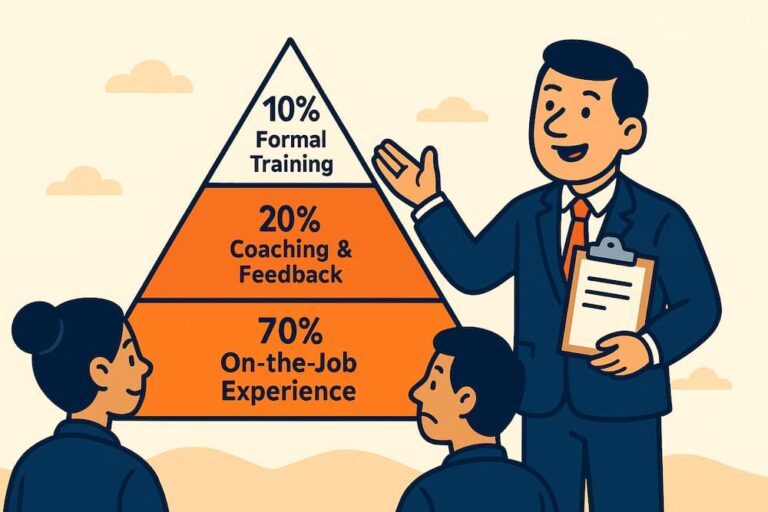
Give them work that forces them to operate outside their comfort zone. Such assignments must be included in their Individual Development plans (IDPs) by using the 70 20 10 learning model.
Examples:
• Leading a part of a cross-functional project
• Fixing an operational problem with no clear owner
• Presenting to senior managers: This is where you see how they behave under pressure and complexity. - Leadership training
Invest in leadership skills early. Focus on strategic thinking, communication, and emotional intelligence. The goal is not to make them “perfect leaders” but to help them understand how leaders think and act. - Visibility
Expose them to senior management and cross-functional teams. Let them represent your team, present results, or participate in steering meetings. High potentials grow when they are put in front of higher expectations.
Ensure their progress is regularly reviewed during your one on one meetings with them. You want to stretch, but not burn out.
RELATED RESOURCES
You may also find our Team development resources useful.
Why This Matters for Your Team
Understanding who your high performers are and who your high potentials are changes how you manage your people. It affects three critical areas:
- Resource allocation
You invest differently.
High performers keep the team running well.
High potentials need coaching, exposure, and room to grow. - Talent retention
People stay when they feel they are developing.
High potentials leave quickly when they are stuck doing the same work with no growth. - Succession planning
Your future team leaders are already inside your team today. Identifying them early prevents last-minute panic when someone leaves or steps up.
The 9 box grid is the perfect tool for High performers and High Potential indicators :
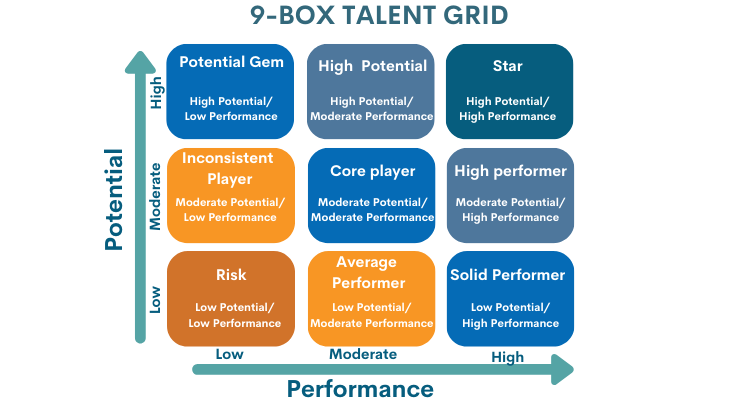
A Practical Way to Review Your Team
When you look at your team, separate these two groups clearly:
High performers
These are the people who consistently deliver. They hit their targets, they are reliable, and they keep operations stable.
High potentials
These are the people who show initiative, learn fast, and influence others. They might not be your top performers yet, but they have the raw material for the job one or two levels above.
The mistake most managers make is assuming that everyone who performs well today will automatically grow into leadership. That is not true, and it is why many promotions fail.
Why High Potentials Matter for You as a Manager
Developing high potentials is not just a “people” exercise. It directly protects your business and makes your life easier.
- You avoid sudden succession crises. You always have someone ready to step up, so you do not lose months replacing or training a new leader.
- You raise the bar for the whole team. When a high potential grows, others follow.
- You increase your team’s capacity. You can finally delegate complex work and focus on the decisions that matter.
High potentials are your leverage. They let you move faster, increase your impact, and create a team that can operate without your constant supervision. If you need additional resources to better manage your team, head over to my Manager tools page.
MORE MANAGER DEVELOPMENT RESOURCES
This article is part of our performance management resources.
Stay sharp for Monday
Practical resources to help managers lead smarter, faster, and with confidence.
Understanding The 9 Box Grid for Talent Decisions
View Article
How the GROW Coaching Model helps to Build Stronger Teams
View Article