Key takeaways
- Ground the Conversation in Observable Facts: Open the discussion by describing what you saw, heard, or measured. By sticking to a specific “Fact” (like a missed deadline or a specific comment) and its business “Impact,” you strip away personal bias and prevent the employee from getting defensive about their personality.
- Diagnose Before You Prescribe: Use the “Alternatives” step to probe for the root cause. Ask what blocked the performance to determine if you’re facing a systemic issue (broken tools or lack of training) or a motivational one. This ensures you aren’t wasting time coaching a problem that actually needs a process fix.
- Force a Measurable “Course-Correction”: Never leave the room with a vague promise to “try harder.” End every session with a specific, documented commitment like a new deadline or a change in workflow. This turns an uncomfortable conversation into a clear action plan that you can track in your next one-on-one.
Table of Contents
The FIAC feedback model is part of the Monday Simon Manager Development Program:
👉 Module 4: Coaching and Feedback for managers
Giving tough feedback is not everyone’s cup of tea, I know that. As a manager, you need a system that gets your people to change their behavior fast without spending months in coaching sessions. The biggest mistake managers make is being vague or, worse, avoiding conflict altogether. That’s when the FIAC Feedback model is the most useful.
FIAC Feedback is a direct, four-step structure that is focused on “problem to resolution”. It stands for Fact, Impact, Alternatives, and Conclusion. It’s a blueprint for moving from an uncomfortable observation to a clear, agreed-upon action plan in minutes, not hours. The FIAC Feedback Model is one of the core Management 101 practices that every manager should master to give structured and effective feedback.
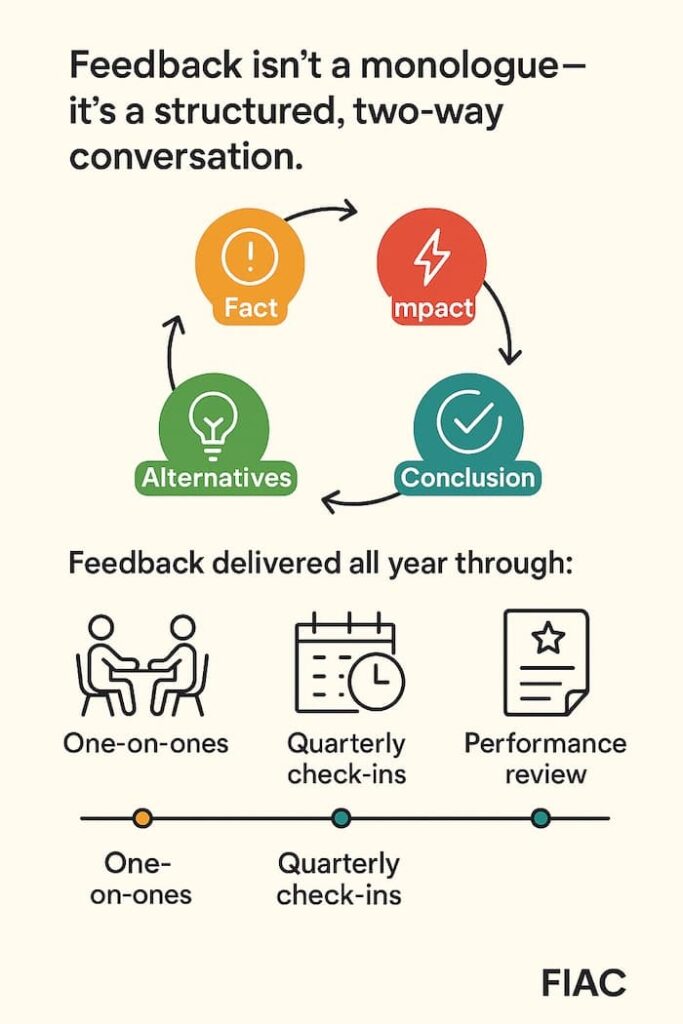
This feedback process is a structured two-way conversation supported by regular one-on-ones and quarterly check-ins as part of your performance management duties.
It moves the conversation away from the employee’s personality and squarely onto the observable, documented action and its effect on the business.
When to Use FIAC Feedback
Use FIAC Feedback to address specific, repeatable behaviors that are actively helping or hurting your team’s results. But overall, it is most useful to address tough feedback, for example:
- Handling Missed Deadlines: When an employee consistently submits reports late, it causes upstream delays.
- Addressing Interpersonal Conflict: When specific actions are creating team friction, like constantly interrupting colleagues in meetings.
The best way to use FIAC is during one on one meeting, not publicly in front of colleagues. It is especially handy if you are dealing with a poor performer or as a preliminary step to craft a Performance Improvement Plan (PIP). Alternatively, this feedback structure can be used every time you are reviewing KPIs and OKRs with your subordinate.
The Unfiltered Power of FIAC Feedback
FIAC Feedback is fast and brutal (in the best way) because it demands clear answers and clear next steps.
- F – Fact (The Observable): Start with the undeniable reality. What did you see, hear, or measure? “I saw that the Q3 sales projections report was delivered 48 hours past the deadline.” Or: “I heard you interrupt Maria three times during the client review meeting.” This step documents a fact.
- I – Impact: This is the punch. The employee must immediately understand the consequences of their actions on the team, the client, or the bottom line. “Because the report was late, we missed the quarterly budget review meeting, and our proposal for additional headcount was tabled until next month.” This links the behavior directly to pain. Without this step, they see it as a minor administrative slip, not a business failure.
- A – Alternatives (The Probe): “What was the barrier that prevented you from meeting that deadline? How can we solve this?” You’re probing for a systemic issue (e.g., lack of training, tool limitations) versus a motivational one. Keep this part short and focused.
- C – Course-Correction (The Commitment): You must walk away with a specific, agreed-upon action that addresses the root cause and prevents recurrence. “So, to prevent this next time, you will set a calendar alert for one week prior, block off three hours for final review, and send me a draft 72 hours before the final deadline. Agreed?” The commitment must be specific and measurable.
Why FIAC Feedback is Your Secret Weapon
Start thinking about feedback as a core business process for risk mitigation and performance acceleration. The main benefits I see are as follows:
- It creates accountability: Because the conversation is fact-based and tied to results, the employee can’t get defensive. They focus on the action and the fix. Saying “Our performance is X, and we need to work towards “Y” is different than saying “Let’s improve performance”. Validating facts before moving to resolution mode helps create accountability.
- Eliminates Bias: When focusing only on the Fact and the Impact, it removes personal opinion. This creates a fair, objective management environment, which builds trust. Your employee does not feel attacked personally, the performance is questioned factually instead of emotionally.
- Directly Impacts Business Metrics: By securing a specific Course-Correction, you are guaranteed to see the behavior and, therefore, the business result, move in the right direction. It’s an investment with a quick return.
Stop wasting vague discussions that achieve nothing but frustration. Start using FIAC Feedback on your most pressing coaching opportunity. You can grab more free resources on my Manager Tools page to help you prepare to give performance feedback.
MORE MANAGER DEVELOPMENT RESOURCES
This article is part of our feedback and coaching resources.
Stay sharp for Monday
Practical resources to help managers lead smarter, faster, and with confidence.

What Is Performance Management? A Practical Guide for Managers
View Article
How to Master KPIs and OKRs for Team Management
View Article