Key takeaways
- Vital Signs vs. Moving the Needle: Treat KPIs to monitor the “health” of current performance (revenue, retention). Treat OKRs to drive ambitious, time-bound improvement (climbing the mountain). You monitor KPIs to ensure stability, but you manage OKRs to achieve growth.
- Leading vs. Lagging Indicators: A KPI often tells you what happened (e.g., customer churn went up), while OKRs focus on the activities that make things happen (e.g., training staff or reducing escalation time). Use OKRs to bridge the gap when a KPI is signaling that something is sick or needs a strategic upgrade.
- Clarify Before You Categorize: Don’t get caught in the HR terminology trap. Whether you call them KPIs or OKRs, the only thing that matters is that your goals are SMART (Specific, Measurable, Achievable, Relevant, and Time-bound). If your team doesn’t know what “winning” looks like in 90 days, no framework will save them.
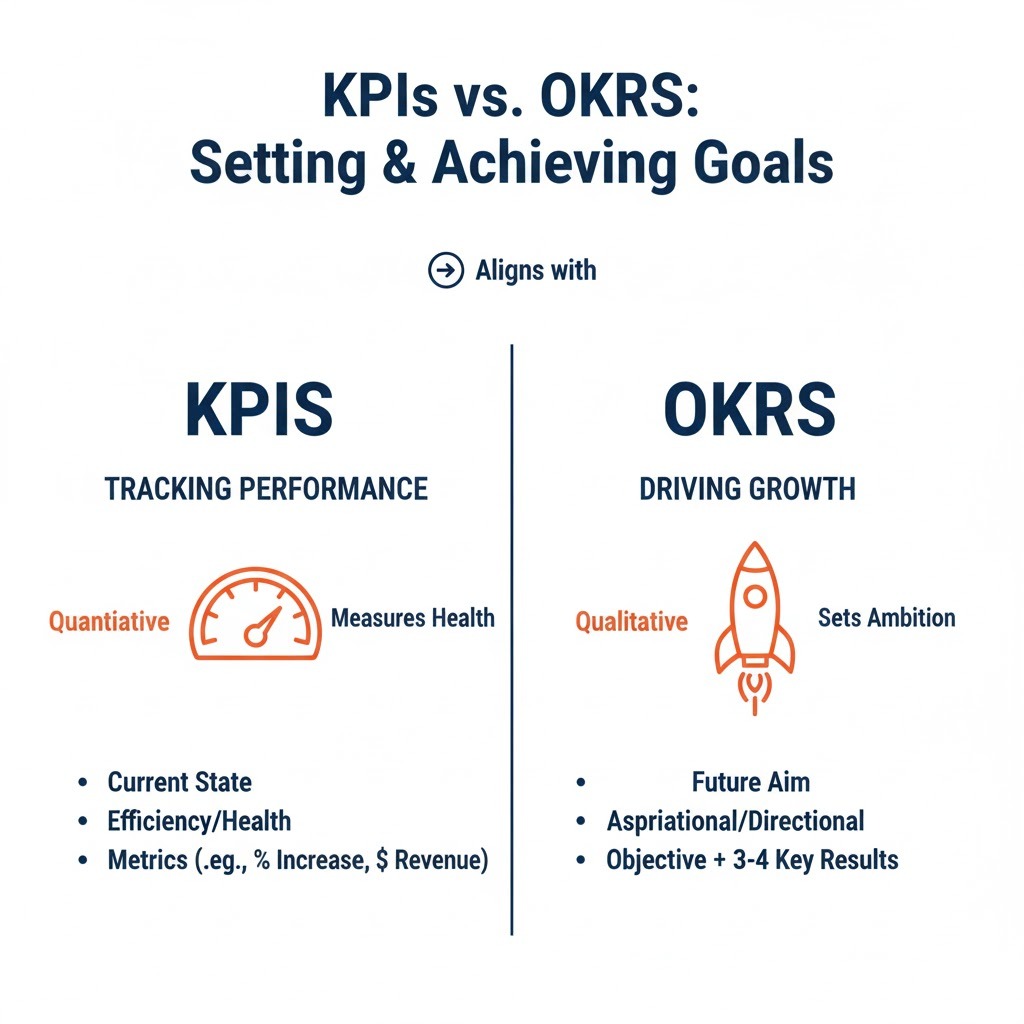
Table of Contents
KPIs and OKRs (and how to set them up for your team) are part of the Monday Simon Manager Development Program:
👉 Module 2: Goal setting for managers
👉 Module 5: Performance management for managers
So, KPIs and OKRs… What is it, and when do you use both? This debate usually belongs to HR, but as a manager, you should still care. If you don’t understand the difference, your team might end up chasing the wrong things, i.e., maintaining stability when they should be driving growth, or pushing for big goals when the focus should be steady performance.
What are KPIs and OKRs?
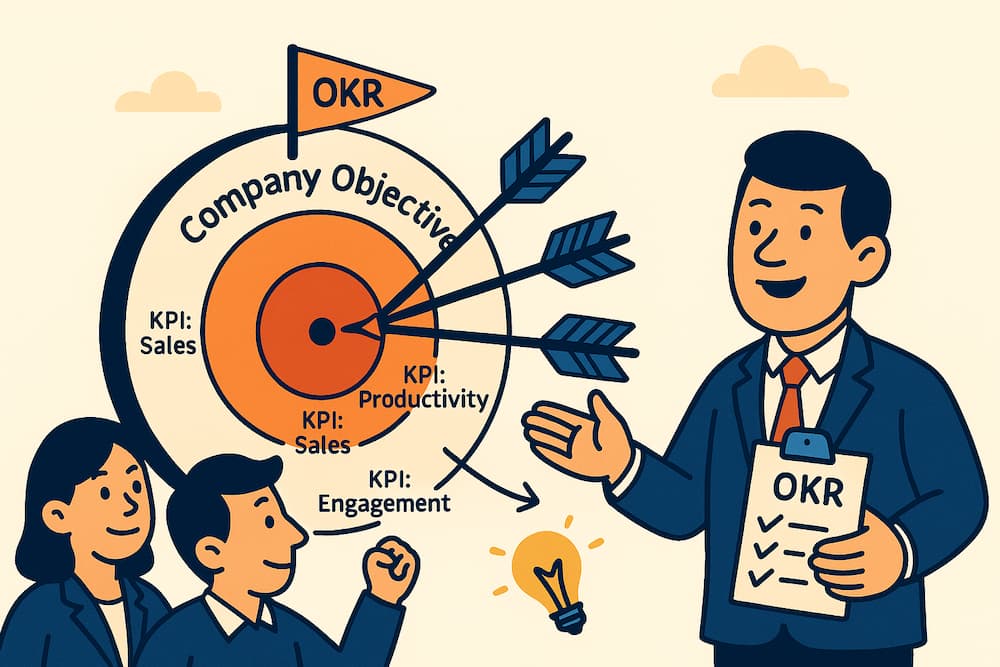
Think of it this way: KPIs (Key Performance Indicators) are your vital signs. They tell you if you are healthy, sick, or dead. They are measures: revenue, retention rate, and average resolution time.
OKR (Objectives and Key Results) is the change you want to make. It’s the goal-setting system you use to drive improvement. OKRs are ambitious, time-bound targets that say, “We want to move the needle from X to Y in the next 90 days.”
To make it simple :
- OKR = Let’s climb the Everest
- KPI = How much oxygen do we have in the tank?
KPIs and OKRs are not interchangeable, but they are complementary.
When to Use KPIs and OKR
These are the distinctions between KPIs and OKR :
- KPIs: Use them for daily monitoring and troubleshooting. If your “Customer Churn Rate” KPI jumps from 5% to 8%, that’s an immediate signal for investigation.
- OKR: Use them for quarterly focus and strategic alignment. When leadership says, “We need to expand market share,” you write an OKR to achieve that specific outcome.
Do you see the difference?
Suppose your goal is to enhance customer satisfaction. A KPI might be “Maintain a customer satisfaction score of 90%.” An OKR could be “Objective: Lead the market in customer satisfaction in Southeast Asia within 12 months. Key Results: 1) Implement a new customer feedback system by Q2, 2) Train all customer service staff in advanced service techniques by Q3, 3) Achieve a 15% increase in customer satisfaction scores in key markets.”
⚠️ If your organization does not communicate clear company objectives, don’t use OKRs. You will fail to create alignment. OKRs only work when they’re tied to strategic outcomes, where each action directly supports a higher goal. Once you have set the objectives, the critical aspect that is too often overlooked is the monitoring. To do so, strictly implement one on one meetings with your staff to review the performance.
Use KPIs instead when you have the freedom to define your own tactics and performance standards as a manager. In my view, KPIs are simpler and more practical to implement.
How to Use OKRs and KPIs Together
While OKRs and KPIs serve different purposes, they can be used together to create a comprehensive performance management system.
1. KPIs are Lagging Indicators (What Happened): A good KPI is an output that reflects the health of a critical business process. This tells you if you met the company standard. It needs to be closely monitored, but it doesn’t tell you how to fix a low score.
2. OKR is the Engine for Change (What We Will Do): If your CSAT KPI is low, you need to drive movement. That’s where you create an OKR. The Objective is qualitative and inspiring: “Objective: Dramatically improve the quality of our Tier 1 customer support experience.”
The Key Results (KRs) are the measurable targets that prove you hit the objective:
- KR1: Reduce the average time to escalation from 15 minutes to 5 minutes.
- KR2: Increase first-call resolution rate from 65% to 80%.
- KR3: Run a mandatory, certified de-escalation training course for all agents by the end of the quarter.
Notice that the Key Results here are often leading indicators; they measure the activity that causes the KPI (CSAT) to improve later. This combination of KPIs and OKR turns simple measurement into strategic action. You monitor the KPI, but you manage the OKRs.
Note: If you have just hired your team member, DO NOT go “full” KPIs during the probation period. Adjust the targets with clear probation objectives before setting the full targets after a successful probation period.
KPIs and OKRs in the end, it doesn’t really matter.
While it’s important to understand what each is and when to use them (since your organization will likely adopt one or the other), the terminology isn’t what drives performance. What truly matters is that your objectives are clear to your team.
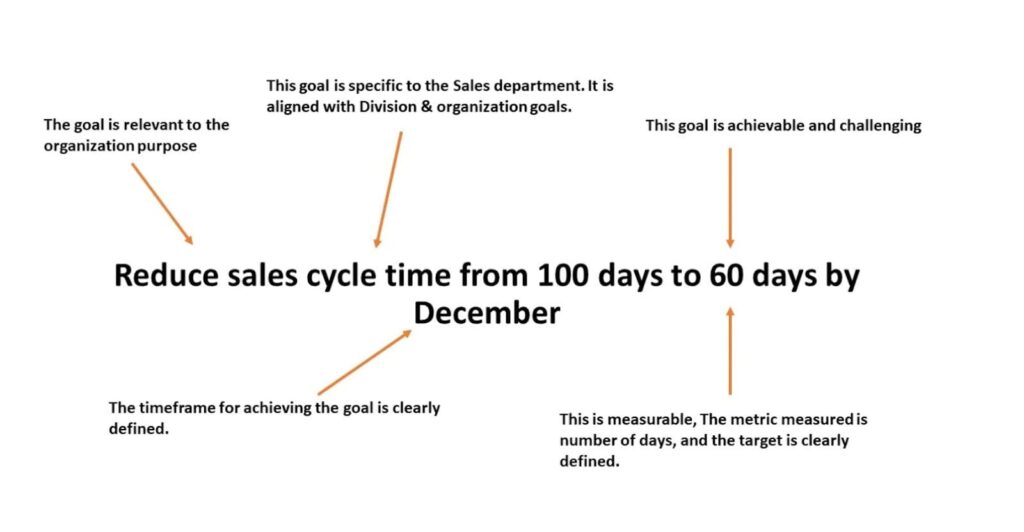
Clear objectives are called SMART goals.
For example: “Increase team productivity by 20% through weekly training sessions by the end of Q3.”
This goal works perfectly within both OKR and KPI frameworks.
Your real job as a manager is to clarify the goal and define the steps. Use KPIs or OKRs as tools to bring that clarity, not as labels that complicate it. You can use my custom ChatGPT tool to generate OKRs and KPIs that suit your department’s objectives. The performance outputs achieved by your team will help you define high performers, Poor performers, and high potential employees.
If you need more Manager resources, click on this link to check out my Manager tools page. I regularly publish actionable resources for managers.
MORE MANAGER DEVELOPMENT RESOURCES
This article is part of our performance management resources.
Stay sharp for Monday
Practical resources to help managers lead smarter, faster, and with confidence.
The 70 20 10 Learning Model: Learn Faster, Spend Smarter
View Article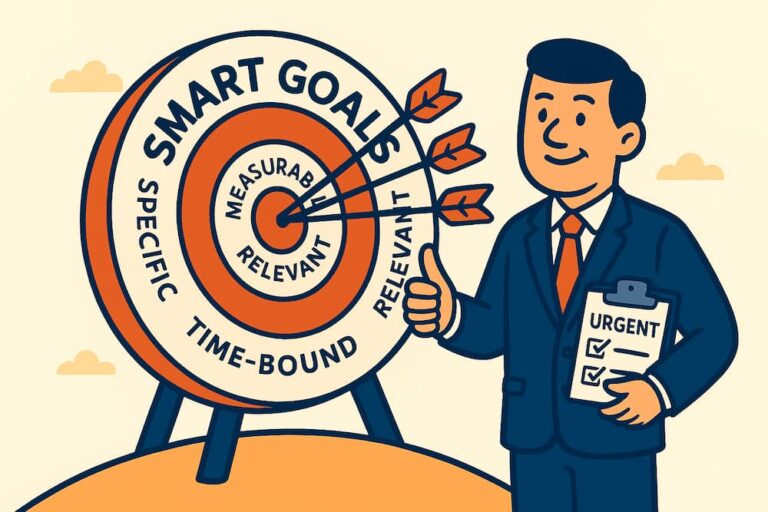
How to Use SMART Goals to Increase Productivity
View Article