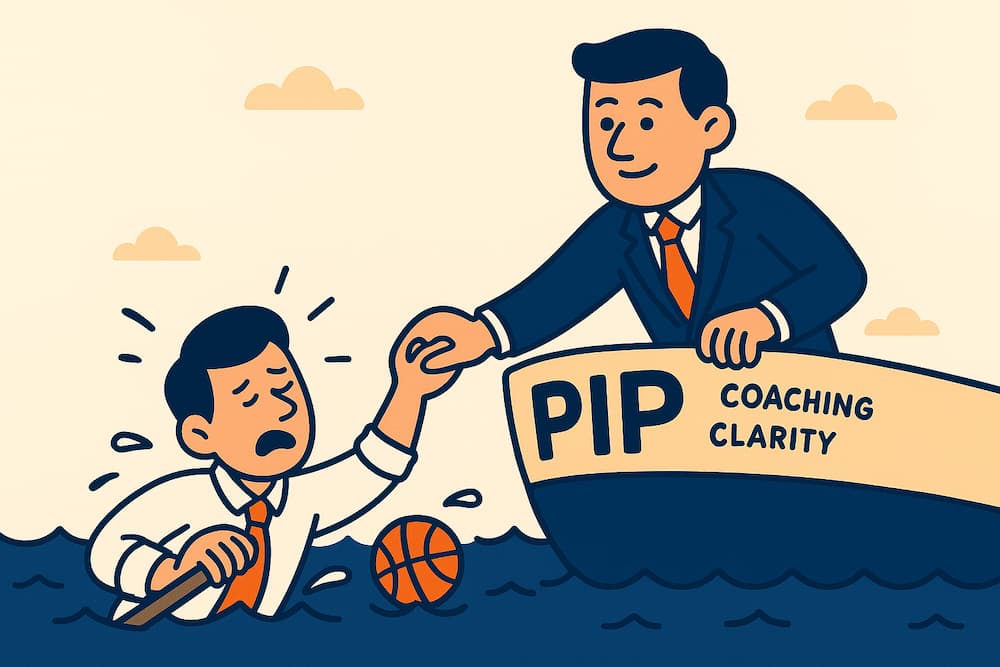
Key takeaways
- Define Outcomes, Not Activities: A PIP is not a to-do list for “attending training” or “meeting with mentors.” It must focus on non-negotiable, measurable business results, like “reducing error rates to 2%” or “hitting 100% of deadlines.” If you measure activity instead of outcomes, you risk keeping a “busy” employee who still isn’t delivering value.
- Diagnose the “Won’t” vs. “Can’t”: Before launching a formal plan, determine if the drag is a skill gap (they lack the tools) or an attitude issue (they lack the drive). Use the PIP as the final, documented bridge for those who have failed to respond to consistent coaching and FIAC feedback.
- Enforce the Timeline Without “Misplaced Empathy”: If you set a 30-day window, stick to it. Extending a PIP out of guilt only drains your energy, demoralizes your high performers, and creates agonizing uncertainty for the underperformer. At the end of the term, the result is binary: they either meet the standard or they exit the business.
Table of Contents
The Performance Improvement Plan (PIP) is part of theMonday Simon Manager Development Program:
👉 Module 5: Performance management for managers
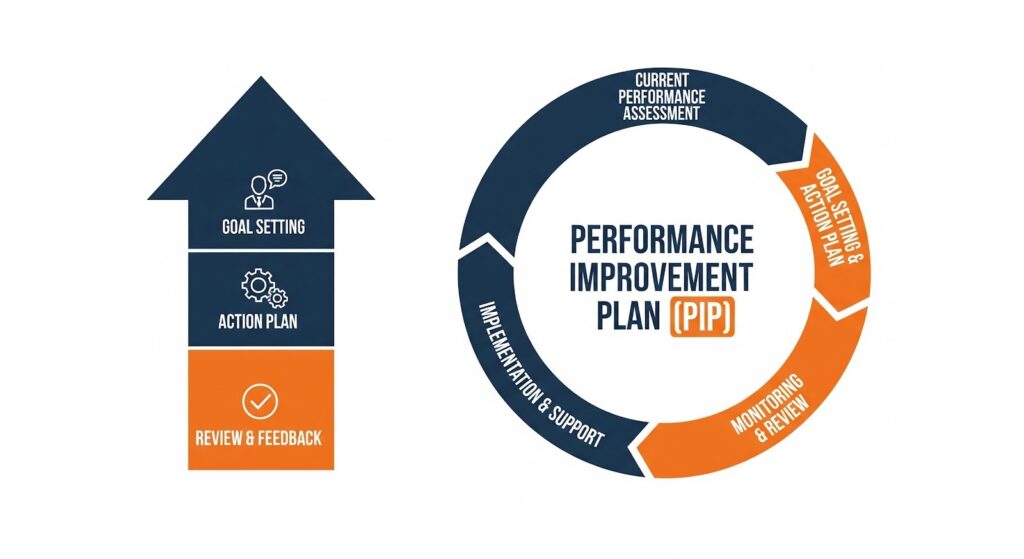
Here is the situation: you hired what you think was a competent person. You have coached, used FIAC Feedback, and you have deployed the GROW coaching model. But here you are, still dealing with a critical drag on your team. You are frustrated because the time spent managing the bottom 5% is draining the energy from your top performers. That’s why you need a Performance Improvement Plan (PIP).
What is a Performance Improvement Plan (PIP)?
A Performance Improvement Plan (PIP) is a formal written document between the manager and the employee that outlines specific, non-negotiable standards of performance the employee must meet within a defined, short timeframe (usually 30 or 60 days, and up to 90 days). It is the final, documented step used to address persistent, critical gaps in performance, with clear consequences if the targets aren’t met. And by consequence I mean, termination.
Think of it as a tightly focused high-stakes plan where the project is the employee’s job performance itself, since your employee did not meet his/her KPIs and OKRs targets. The intent is to provide a dedicated action plan for your team members identified as poor performers.
A performance Improvement plan looks like this:
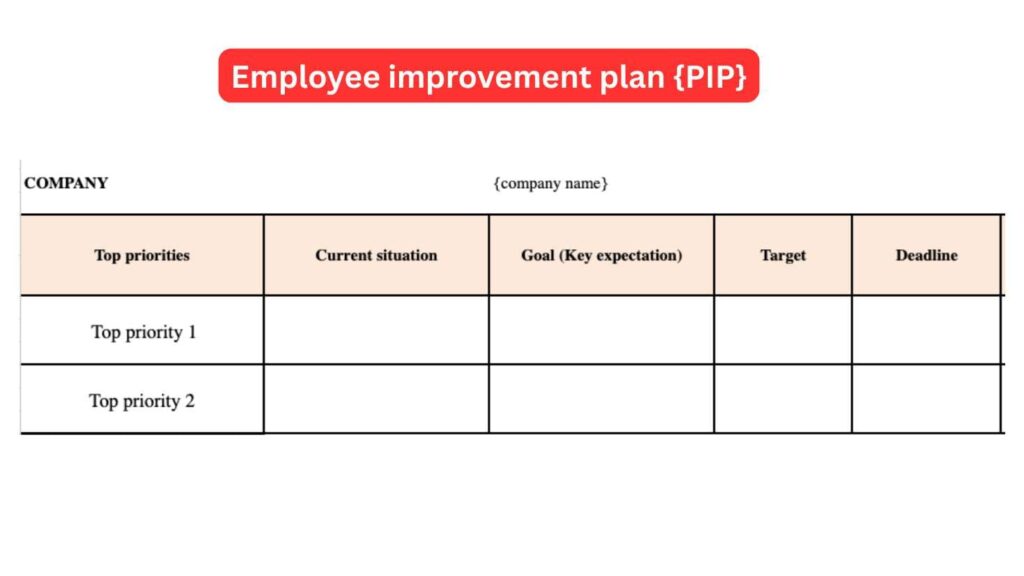
Download my PIP template below:
When to Use a Performance Improvement Plan (PIP)
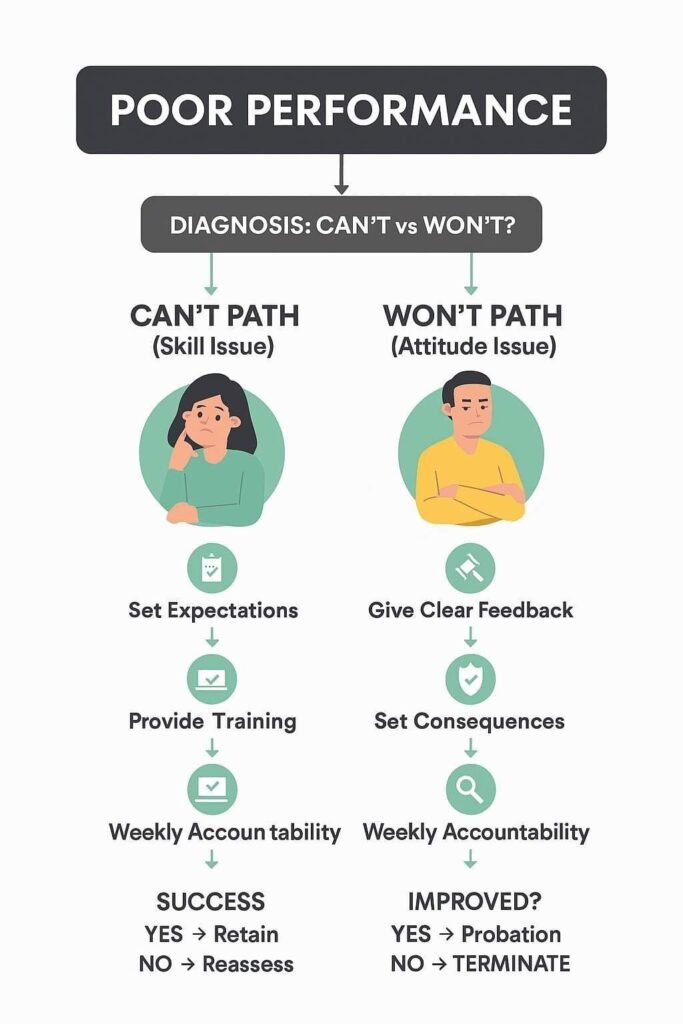
A Performance Improvement Plan (PIP) is for fixing fundamental issues that are actively hurting the team or the business. When you use a performance improvement plan, you need to ensure that to diagnose the root cause first (I won’t VS I can’t).
Do not jump to this step unless you have already done substantial, documented coaching. The PIP is especially useful when you face the following situations:
- Critical, Repeated Failure: When an employee repeatedly fails to meet core job requirements after several verbal and written warnings.
- Non-Negotiable Business Impact: When the underperformance is directly leading to lost revenue, client churn, or significant compliance risk.
- Documentation for Exit: When you need clear, undeniable legal documentation of the performance gap and the specific failure to correct it.
If you’re implementing a Performance Improvement Plan (PIP) for one of your team members, a tough conversation is inevitable. Don’t design the plan in isolation.. for extra support, access my custom ChatGPT for difficult conversations.
The Manager’s Strategy for the Performance Improvement Plan (PIP)
1. Define the Exit Criteria: The biggest mistake is making the PIP about activity (“Attend two trainings,” “Meet with a mentor”). The Performance Improvement Plan (PIP) must only contain measurable, observable outcomes that align directly with the core job functions. Use the same principles as the STAR interview method to define the expected behaviors.
Example: If the problem is late deliverables, the PIP requirement must be: “Submit all final client reports (Reports A, B, and C) on or before the assigned deadline with 98% accuracy, as measured by post-review audit.” The outcome is clearly what matters here.
2. The Manager’s Commitment (Your Role): The PIP must clearly state what you will provide. This usually includes: weekly, mandatory check-ins (which you schedule and document), providing access to necessary tools (like the upgraded software they claimed to need), or specific internal mentorship. Keep your commitment clear and minimal. If a training is required, do not hesitate to put it in the plan as well.
3. Stick to the Timeline: A 30-day Performance Improvement Plan (PIP) means 30 days. Managers often sabotage the process by extending it out of misplaced empathy. This only creates agonizing uncertainty for the employee and drags your team’s performance down longer. If the employee can’t meet the clearly defined goals in the allocated time, then the consequence (separation) must occur, be documented, and be swift.
This structure ensures fairness, eliminates ambiguity, and delivers a quick resolution.
Why the Performance Improvement Plan (PIP) is Necessary
Nobody likes having this conversation, but handling underperformance directly is the hallmark of a strong manager. This process is beneficial for everyone involved. It is nothing less than performance management in practice:
- Protects High Performers and high potential employees: By quickly resolving performance drag, you ensure your best team members aren’t overworked or demoralized by carrying unproductive colleagues.
- Creates Clarity and Fairness: It forces a clear-cut, fact-based process. If the employee fails, there is no ambiguity about the expectations or the outcome, which minimizes legal risk and emotional fallout.
- Accelerates Business Results: You either get a fixed, motivated employee who is now performing to standard, or you open the door to hire a replacement who can contribute fully, improving overall team output.
If you have coached them and nothing sticks, use the Performance Improvement Plan (PIP) as the focused contract for success or separation. If you are looking for additional resources to manage your team, check out my resources on the Manager Tools page.
MORE MANAGER DEVELOPMENT RESOURCES
This article is part of our performance management resources.
Stay sharp for Monday
Practical resources to help managers lead smarter, faster, and with confidence.
Bell Curve Performance Ratings: How It Really Works
View Article
What Is Performance Management? A Practical Guide for Managers
View Article