Key takeaways
- Focus on Outcomes, Not Activities: Stop treating your Job Description (JD) as a static list of tasks like “compiling reports” or “attending meetings.” Rebuild it around the specific business problems the role is meant to solve to ensure you are hiring for results rather than just “busyness.”
- Define Measurable Competencies: Replace generic HR buzzwords like “strong leadership” with observable, result-driven behaviors. Instead of vague skills, specify the exact action required so you can accurately judge performance.
- Connect the JD to Your Performance System: Use the job description as the foundation for your OKRs and Individual Development Plans (IDPs). A JD should clearly state the three non-negotiable results needed in the next 12 months, turning it from a boring document into a living tool for setting expectations and closing skill gaps.
Table of Contents
👉 Try my ChatGPT for job descriptions
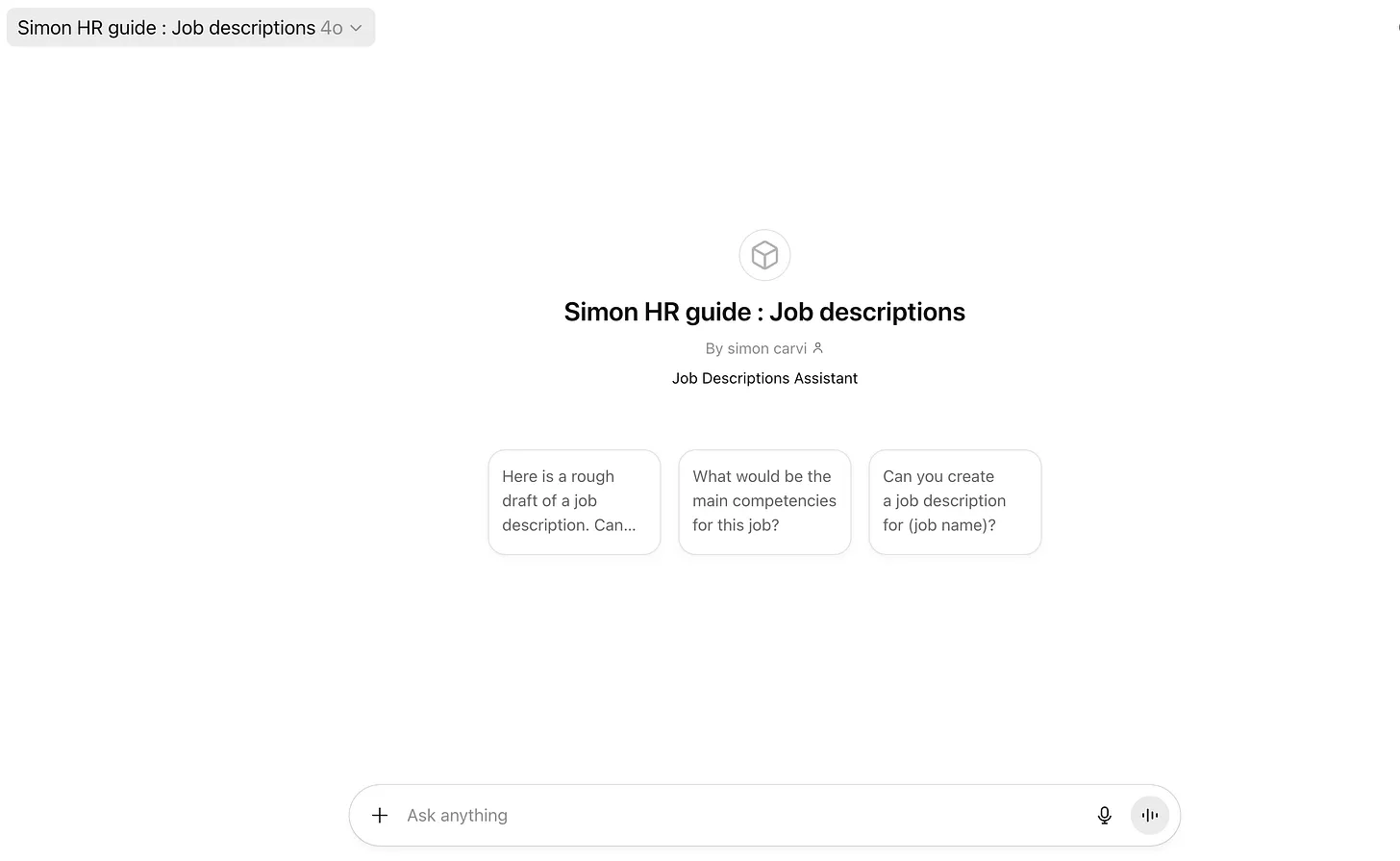
Your job descriptions are supposed to be your first, best tool for setting expectations. That’s why I built the ChatGPT for job descriptions designed for busy managers. It helps to cut through the BS and gives you a JD that’s immediately useful for hiring, goal setting, and performance reviews. This ChatGPT for job descriptions is part of my custom manager tools for managers. You can access all my Manager Tools right away.
The manager use case for better job descriptions
The biggest mistake managers make is thinking of a JD as a static HR document. Conventional HR wisdom tells you to focus on tasks:
“The employee will compile reports.”
“The employee will attend meetings.”
This is the wrong focus. These are activities, not outcomes. And when you base performance reviews on activities, you end up with “busy” people who aren’t delivering business value.
Instead, start with the business problem the role is meant to solve. And by the way, this is the same thinking principle you should use when setting KPIs and OKRs for your team.
I included a competency detector in the ChatGPT for job descriptions builder. The intent is to ensure we identify measurable skills tied to results.
For example, the role isn’t “manage email campaigns,” but rather:
“Increase free trial sign-ups by 20% by identifying high-converting customer segments and tailoring messaging.”
How the ChatGPT for Job Descriptions connects your role with results
The ChatGPT for job descriptions tool helps managers connect every JD with three pillars:
- Goals (OKRs/KPIs): The three non-negotiable results this person must deliver in the next 12 months.
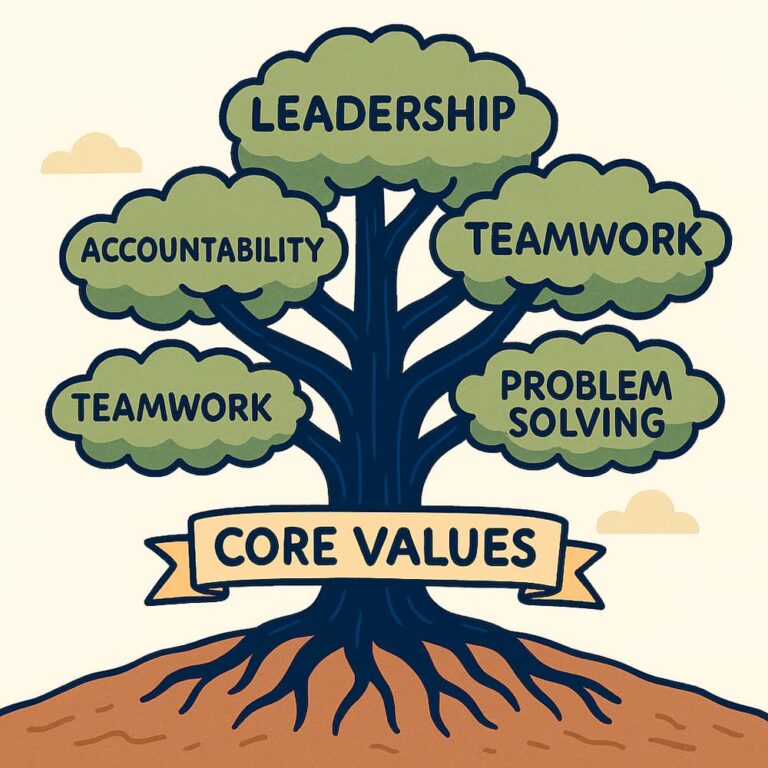
- Core Competencies: The 3–5 specific, observable behaviors required to hit those goals (e.g., Data-Driven Decision Making, Stakeholder Management, etc.).
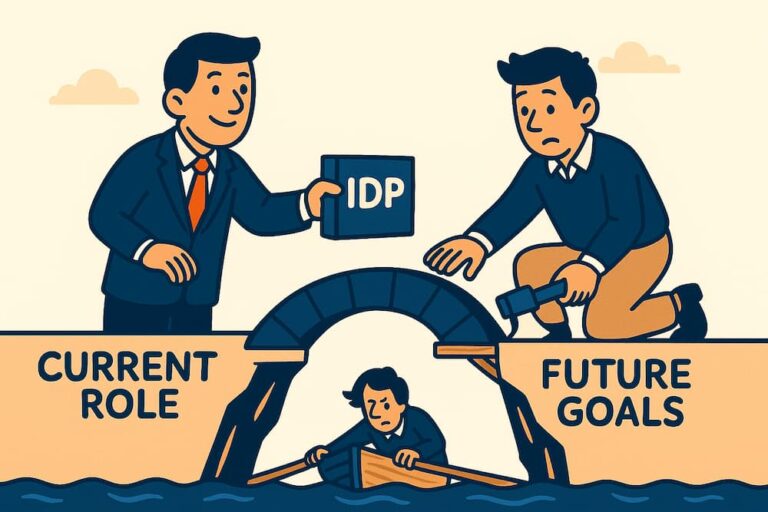
- Individual Development Plan Starters: Once you know the competencies, the next step is creating an action plan to close the gaps.
How ChatGPT helps you build job descriptions that actually work
You might say:
“I need a Maintenance Supervisor for a factory with three lines, leading eight technicians.”
From that input, the ChatGPT for job descriptions builder will generate:
- A tailored Job Summary that sounds like a human wrote it.
- Clear Key Responsibilities (no jargon, no fluff).
- Core Competencies, the real ones that drive performance.
- Required Experience & Education that makes sense for your context.
Before providing the output, the chat suggests a few key setup questions first, such as:
- What is the department?
- What is your industry?
- What are the main deliverables of this role?
MORE MANAGER DEVELOPMENT RESOURCES
You may also find our performance management resources useful.
Building competencies that matter
I like to force competencies identification in job descriptions. Too often, managers skip it because it feels too “HR-ish.” Words like “influencing skills” or “stakeholder management” make your eyes glaze over, right?
Take the example of a Maintenance Supervisor. Instead of writing:
“Strong leadership skills,”
You can write:
“Plans weekly maintenance schedules with clear priorities and holds team accountable for execution.”
The ChatGPT for job descriptions has built-in logic that connects each function (Operations, Sales, HR, etc.) with its typical core and technical competencies. You can then fine-tune them to match your environment.
Examples:
- Operations Supervisor → Decision-making under pressure, Continuous improvement mindset
- Sales Executive → Building client trust, Handling objections effectively
- Finance Analyst → Analytical problem-solving, Business acumen
Once you define these, you can link them later to performance appraisals, training needs, or career paths. That’s how you turn a simple JD into a more practical management tool.
MORE MANAGER DEVELOPMENT RESOURCES
You may also find our team development resources useful.
Monday morning action plan: create your team goals done in minutes
Write the Outcome-Focused Job Description (JD)
The job is defined by the single most important outcome:
“Increase organic leads by 30% in 12 months.”
Use ChatGPT for job descriptions to generate the JD, focusing on desired Outcomes and Core Competencies (like Analytical Skills and Technical SEO).
Responsibilities should be clear, action-oriented, and tied to the goal (not just generic tasks).
Eliminate HR jargon so the language is direct, operational, and understood on Day 1.
The resulting JD should be a clear and focused roadmap for the role.
Access my ChatGPT for job descriptions
👉 Access my ChatGPT job descriptions
Additional ChatGPTs for managers
👉 ChatGPT for one on ones
👉 ChatGPT for competency development
👉 ChatGPT for difficult situations
👉 ChatGPT for KPIs, OKRs, and IDPs
Stay sharp for Monday
Practical resources to help managers lead smarter, faster, and with confidence.
How to Create an Effective Individual Development Plan (IDP)
View Article
How to Master KPIs and OKRs for Team Management
View Article